Select Language:
Recently, two of China’s leading large-scale AI model companies, MiniMax and Zhipu, took significant steps toward the public markets, revealing their IPO prospectuses just two days apart. MiniMax filed its prospectus on December 21, 2025, in Hong Kong, signaling its entry into the capital scene with a fierce sense of competition—only 48 hours after Zhipu’s own disclosures.
Both firms are widely regarded as frontrunners in the domestic AI sector, each showcasing rapid growth and ambitious expansion plans. Yet, the question remains: who truly stands at the forefront of the global large-model race? The answer has yet to be determined.
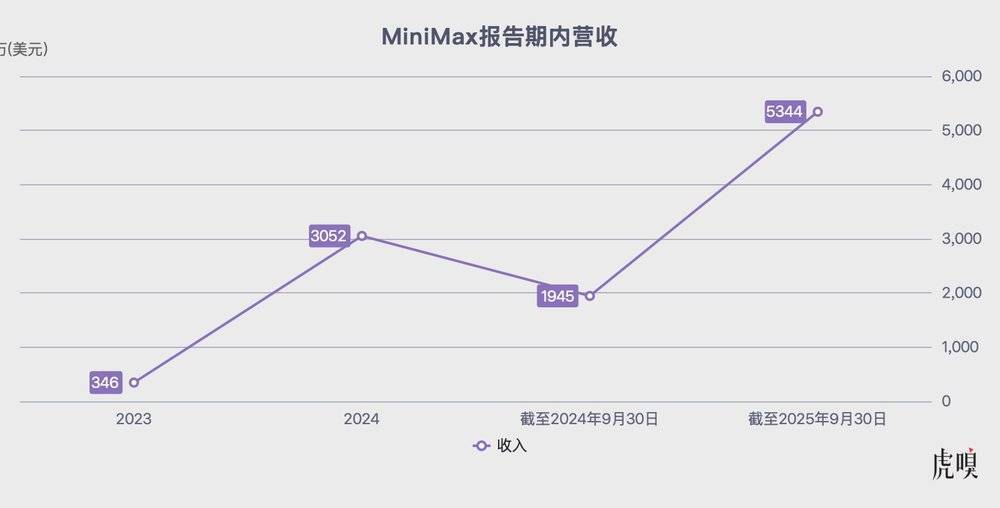
Examining MiniMax’s IPO document reveals a striking revenue growth trajectory over the past two years. In 2023, its revenue was approximately $3.46 million (roughly 24.36 million yuan), which soared 782% to about $30.52 million (around 210 million yuan) in 2024. By September 2025, the company’s revenue reached approximately $53.44 million (roughly 377 million yuan), reflecting a staggering 175% year-over-year increase.
Notably, MiniMax reports revenues predominantly in U.S. dollars, contrasting with Zhipu’s use of the Chinese renminbi in its filings. This distinction underscores differing market focuses: MiniMax derives about 70% of its revenue from international sales, with the remaining 30% from domestic markets, whereas Zhipu’s income primarily stems from China-based clients.
Both companies submitted comprehensive disclosures highlighting their financials, yet their underlying business models diverge significantly. While MiniMax’s revenue spike is driven by rapid user growth of AI-native consumer products, Zhipu’s revenues have historically relied on enterprise and government deployments.
MiniMax’s profit and loss statements demonstrate considerable losses alongside rapid expansion. For example, in 2023, its net loss hit approximately $269 million (about 1.89 billion yuan), roughly 78 times its annual revenue. That loss narrowed in 2024 to about $465 million, although it still represented around 15 times the year’s income. As of September 2025, the company’s net loss further increased to over $512 million, yet relative to revenue, the loss-to-income ratio improved to roughly 9:1—a sign of operational efficiency gains.
Meanwhile, Zhipu’s losses in 2023 and 2024 were approximately 787 million yuan and 2.96 billion yuan, respectively, with the latter reflecting an increasing trend. By mid-2025, its cumulative loss reached roughly 2.36 billion yuan. Despite hefty deficits, both companies’ investment efforts focus on future potential rather than immediate profitability.
Employee headcount also offers insight into their organizational structures. As of late 2025, MiniMax employed around 385 staff members, with nearly 74% in R&D. Zhipu, in comparison, maintains a workforce of about 1,000, with R&D constituting over 70%. Such differences hint at distinct operational philosophies: MiniMax favors a lean, product-driven approach, whereas Zhipu leans toward large-scale engineering and project-based model deployment.
Assessing gross profit margins further illuminates their strategic divergent paths. MiniMax’s gross margin improved from a negative 24.7% in 2023 to positive 12.2% in 2024, reaching 23.3% by September 2025, illustrating ongoing profitability traction. In contrast, Zhipu’s margins have remained steady around 50%, indicative of its more stable, project-based business model.
Revenue streams reinforce these contrasts. MiniMax’s income primarily flows from AI-native products such as Talkie and Hekou AI—consumer-oriented offerings—serving mainly the C-end (individual users). Its AI products accounted for over 70% of revenue by late 2025, complemented by enterprise services via APIs. Zhipu, on the other hand, emphasizes enterprise and government clients, earning predominantly through private deployment and MaaS (Model as a Service), with roughly 82% of its revenue from such channels.
Cash flow status underscores the high stakes involved in AI development. Since inception, MiniMax has raised over $1.5 billion USD, with about $1.1 billion USD remaining in cash reserves as of late 2025. This leaves it with roughly $500 million USD in cumulative expenditure, supporting aggressive R&D and market expansion. Zhipu has not publicly disclosed detailed cash figures, but industry comparisons, such as OpenAI’s cumulative investments exceeding $40 billion, highlight the immense capital required for global competitiveness.
Overall, MiniMax and Zhipu, though entering the market almost simultaneously, reflect markedly different strategic paths. MiniMax’s focus on consumer product scaling and rapid revenue growth contrasts with Zhipu’s emphasis on enterprise-grade infrastructure and stable profit margins. These differences suggest they are not direct competitors but rather exemplify two distinct types of large-model companies emerging in China.
Industry experts interpret this dual trajectory as a broader reflection of the sector’s complexity: the market is learning to evaluate and value diverse business models in AI. While neither is guaranteed to succeed outright, their public listings provide crucial benchmarks for future investment and strategic decisions.
From Hong Kong Stock Exchange’s perspective, these enterprises exemplify the evolving landscape of AI firms—each embodying different “genes” and growth assumptions. Zhipu’s research-oriented, open-source DNA aligns with an infrastructure-driven model, emphasizing long-term, stable growth. Meanwhile, MiniMax’s product-centric approach aims for quick user acquisition and revenue scaling, leveraging consumer markets worldwide.
In the near term, uncertainties such as declining token economics due to AI price wars and the intensifying influence of cloud giants on MaaS markets complicate growth prospects. Additionally, external factors like geopolitical regulations, platform policies, and emerging open-source models pose challenges and opportunities.
As these companies forge ahead, the broader industry watches closely. Their successes—or setbacks—will shape how capital allocates resources, define business expectations, and influence the future of large-scale AI in China and beyond. The current moment may not produce an immediate winner, but it marks a critical phase where transparent evaluation and strategic flexibility are paramount for all stakeholders.
 ChatGPT
 Perplexity
 Gemini AI
 Grok AI