Select Language:
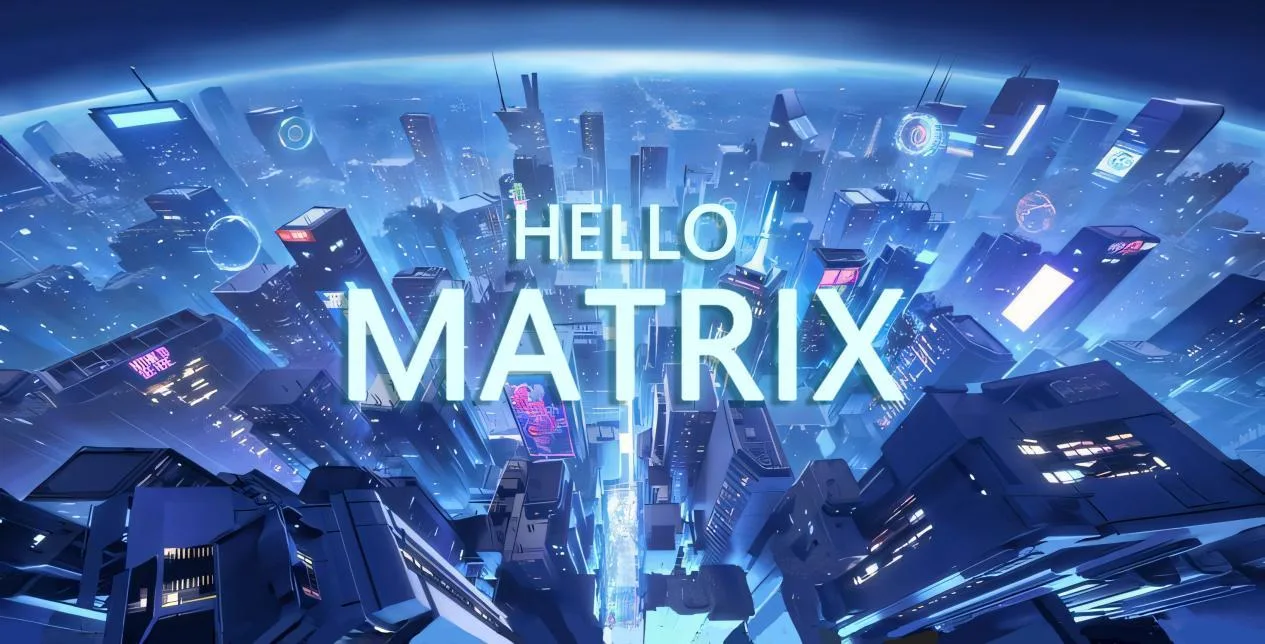
On February 14, Kunlun Wanwei officially launched its self-developed "Matrix-Zero World Model," making it the first company in China to achieve breakthroughs in both 3D scene generation and interactive video generation technologies. This development signifies a new phase for Chinese AI enterprises in the field of spatial intelligence. The Matrix-Zero model is expected to drive intelligent transformations across various sectors, including gaming, film, and virtual interactions, while providing essential technological support for embodied AI and artificial general intelligence (AGI).
The Matrix-Zero World Model comprises two main components:
The 3D Scene Generation Model allows users to create fully explorable 3D environments simply by uploading an image. This model supports dynamic physical effects and multi-style transfers, offering broader exploration capabilities and higher degrees of freedom compared to similar international products like Google’s World Labs.
The Interactive Video Generation Model is driven by real-time user inputs, producing dynamic interactive videos with precise control over perspective shifts, catering to the needs of virtual environments and immersive experiences.
Kunlun Wanwei’s technical team shared that the lifelike effects of the 3D scene generation rely on two proprietary modules: the Scene Layout Generation Module, which transforms uploaded images into geometrically consistent 3D scene frameworks using micro-rendering techniques and diffusion models; and the Texture Generation Module, which fills in missing geometric and texture aspects of a scene in real-time as the user adjusts their viewing angle, ensuring consistency and realism from any perspective.
In addition, the model allows the generation of dynamic scenes, such as simulated wind or flowing water, and can adapt to diverse stylistic inputs ranging from realistic to cartoonish or traditional ink wash.
Previously, Google’s Genie series showcased the potential of world models in video generation and interaction. However, Kunlun Wanwei has enhanced the precision of matching user intent with generated content. Its interactive video model features a proprietary "User Interaction Module" that, combined with generative video technology, allows for meticulous control over perspective changes. For instance, in a virtual setting, user commands can instantly alter the direction of the video content, making the outcome more aligned with interactive expectations.
The Matrix-Zero World Model is set to launch in April 2024, with initial applications in Kunlun Wanwei’s AI gaming production and AI short film development sectors, offering developers efficient content generation tools. The company predicts that as video model technology matures, traditional 3D engines may no longer be necessary for game development, significantly lowering the entry barriers for filmmakers.
Looking ahead, spatial intelligence technology is viewed as a critical pathway to AGI. Kunlun Wanwei plans to continue evolving its AI platform, exploring experimental simulations and digital twins in virtual environments to further advance AI from mere perception to action and creation.
World models are becoming the new focus in the global AI competition, centering on the capability to understand and generate representations of the physical world. Kunlun Wanwei’s recent technological breakthrough not only fills a gap in the domestic spatial intelligence landscape but also opens new possibilities for AI-driven content production and interaction. Achieving higher precision and controllability in open environments may emerge as a key challenge in the next stage of technological rivalry.
 ChatGPT
 Perplexity
 Gemini AI
 Grok AI