Select Language:
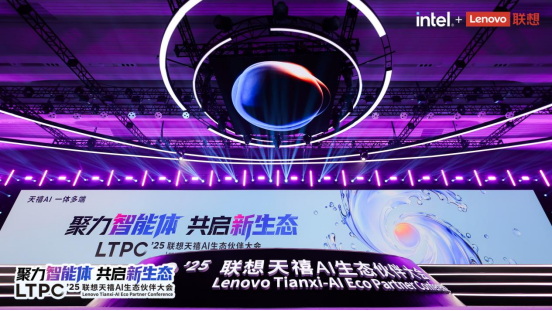
On December 26, 2025, Lenovo held its LTPC 2025 event in Beijing, showcasing significant advancements in its personal AI ecosystem. During the conference, the tech giant announced that its Tianshi AI has been upgraded to version 3.5 and outlined its conceptual evolution from an “AI assistant” to a “collaborative AI teammate” capable of closed-loop execution. Lenovo Vice President Abulickm Abulimiti emphasized the industry’s growing consensus on accessible personal AI and revealed a strategic vision centered around an “all-in-one” approach—combining Tianshi’s personal superintelligent agent with a variety of device endpoints. The goal is to create a human-centered AI ecosystem, ultimately providing every user with a personalized “AI twin.”
According to official data, the Tianshi AI ecosystem now boasts over 280 million monthly active users, with more than 70% of this demographic aged 18 to 34. The platform has surpassed 4 billion releases in 2025, highlighting rapid growth. To further invigorate its developer community, Lenovo partnered with Volcano Engine to launch the “Tianshi AI Ecosystem Pilot Program,” accompanied by a substantial commercial incentive package. Developers will receive 100 million tokens in vouchers, and Lenovo committed that all AI-driven profits over the next 12 months will be entirely allocated to developers. This initiative aims to reduce barriers to entry and accelerate the transition from experimental technology to viable commercial solutions.
Addressing changing AI industry models, Lenovo highlighted that with China’s AI user base expected to exceed 500 million by 2025, the value assessment framework for intelligent agents is shifting from traditional SEO (Search Engine Optimization) to a new paradigm called GEO (Generative Engine Optimization). This indicates that future traffic distribution will lean heavily on an AI’s ability to understand user intent, collaborate effectively, and deliver reliable results, rather than relying solely on keyword matching. To support this shift, Lenovo is working on foundational infrastructure components such as A2A collaboration protocols, TAC connectivity, and TAP payments to establish a comprehensive commercial closed-loop—from understanding intent to task completion.
The newly unveiled Tianshi AI 3.5 features upgrades in personalized memory, multi-agent collaboration, and interactive experiences, including automation tools like ChatExcel for productivity enhancement. Looking ahead, Lenovo previewed Tianshi AI 4.0, which aims to feature deep cognition capabilities that “understand your thoughts” and cross-application resource scheduling that “fulfills your wishes.” The company also discussed the evolution from “Internet of Everything” towards a “Physical AI” model, where integrating AI brains with system “small brains” will drive the self-evolution of physical systems.
The event concluded with an announcement that Lenovo would debut at CES 2026 on January 7th. At the event, the company will join industry leaders such as NVIDIA CEO Jensen Huang, Intel board member Chen Liwu, and AMD CEO Su Zifeng to explore the future of AI-powered PCs and innovations shaping the industry landscape.
 ChatGPT
 Perplexity
 Gemini AI
 Grok AI