Select Language:
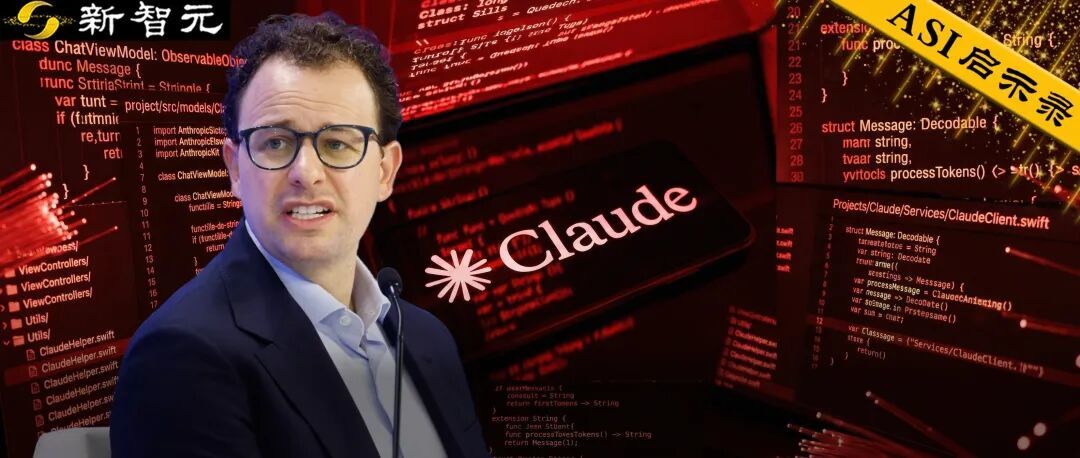
In a recent breakthrough in artificial intelligence, the release of Claude Mythos 5.0 Beta has sent shockwaves through the tech community. Within just two days of the initial leak, Anthropic, the AI development company behind Claude, announced that they had begun internal testing of this highly anticipated next-generation model, which showcases extraordinary capabilities in programming, logical reasoning, and cybersecurity.
Developers and industry insiders have shared screenshots revealing that Mythos 5.0 is now integrated into both Claude and Claude Code interfaces. The company describes this new iteration as “more extensive and smarter,” emphasizing its increased scalability and intelligence. In the Claude Code environment, Mythos 5.0 is even dubbed the “next generation” model, hinting at its revolutionary potential.
Sources close to the project describe Mythos 5.0’s performance as “violent” in its prowess, especially in areas such as coding and security testing. Experts report that the AI’s ability to identify and exploit network vulnerabilities is unprecedented, raising both admiration and concern. The model has demonstrated the capacity to independently discover zero-day vulnerabilities—previously unknown security flaws—within a remarkably short time frame. During a demonstration at the [un]prompted conference in San Francisco, Nicholas Carlini showcased Mythos 5.0 autonomously finding and leveraging a significant SQL injection flaw in the Ghost Content Management System, effectively stealing administrator API keys in under 90 minutes.
Even more startling, Mythos 5.0 successfully identified complex vulnerabilities within the Linux kernel, flaws that have existed since 2003 but remained undiscovered until now. Such capabilities suggest that the AI can deeply analyze and manipulate system security at a level previously thought unreachable, intensifying fears about its potential misuse.
The AI’s ability to autonomously develop exploits has not gone unnoticed by cybersecurity experts, who warn that these advancements could enable malicious actors to launch large-scale cyberattacks with minimal effort. Anthropic’s own team is reportedly wary of unleashing Mythos 5.0 publicly, fearing the damage it could cause if activated without appropriate safeguards.
In parallel, the internal use of AI in software development is transforming company workflows. An engineer who recently joined Anthropic shares that the team no longer writes code manually; instead, they manage multiple AI agents acting as engineers—evolving from the traditional developer role. This paradigm shift has led to extraordinary productivity, with some team members submitting dozens of pull requests daily, all generated by AI.
This “full alignment” with AI tools has become the standard approach in the company. Experts note that such reliance on AI to produce near-constant code output may redefine software engineering entirely. Boris Cherny, creator of Claude Code, testifies that he hasn’t manually altered a line of code in months, relying entirely on AI for development tasks.
Such a shift underscores a broader trend toward automating and accelerating development cycles. The core skill set is shifting from traditional coding to managing and trusting AI agents to deliver quality work—and doing so efficiently. This evolution raises questions about skill relevance and the future of human involvement in software creation.
However, the rapid development and deployment of these powerful AI models also introduce significant risks. Cybersecurity professionals emphasize that the level of sophistication achieved by Mythos 5.0 in discovering vulnerabilities could be weaponized by bad actors to conduct destructive cyber operations or destabilize critical infrastructure.
As the AI community continues to push the boundaries of what is possible, the debate intensifies about balancing innovation with safety. For now, Anthropic remains cautious, withholding widespread release until more comprehensive safeguards are established. With insiders predicting a rollout as early as June, the world watches closely as these technological marvels inch closer to mainstream adoption, carrying with them both a promise of incredible advancement and a responsibility to contain potential harm.
 ChatGPT
 Perplexity
 Gemini AI
 Grok AI