
Select Language:
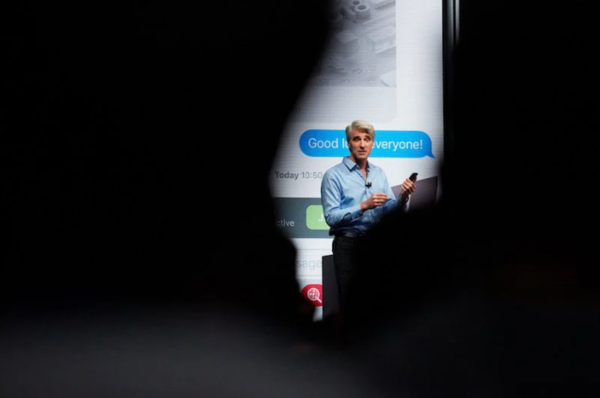
According to a detailed report by The Information on January 22, Apple has undergone a significant shift in its artificial intelligence strategy over the past year. Central to this transformation is Craig Federighi, Apple’s senior software executive, who has taken direct control of the company’s AI division and is now leading key decisions regarding the future of Siri and other “Apple Smart” features across the entire product lineup.
Federighi’s increased involvement signals a strategic pivot influenced by internal discussions and shifting priorities within Apple. Last fall, he addressed a combined software and AI team, expressing enthusiasm for closer collaboration but also subtly indicating dissatisfaction with the pace of progress in AI development. Some members of Apple’s foundational model team interpreted his comments as a critique of their work.
By December, Apple consolidated AI leadership under Federighi, completing a transition that began earlier in the year. During that period, Siri’s management responsibilities moved away from the AI team and into Federighi’s software department. Recently, Apple announced plans to incorporate Google’s Gemini AI model to bolster future AI enhancements, including an improved version of Siri. Federighi believes integrating third-party models will enable Apple to deliver a groundbreaking Siri update later this year—a move that had previously been delayed until 2025 and generated considerable debate.
Despite these developments, internal concerns about placing AI under Federighi’s control have surfaced. Colleagues describe him as highly cost-conscious and skeptical of investments with uncertain returns, contrasting sharply with rival companies like OpenAI, Meta Platforms, and Google, which have invested hundreds of billions in data centers, chips, and AI research personnel.
Apple has emphasized on-device processing and its proprietary “private cloud computing” system using Apple chips to limit infrastructure costs. The company has reportedly been waiting for AI computing costs and talent expenses to decrease, betting that most consumer applications can ultimately be handled locally on devices.
Sources also indicate that Federighi views AI as unpredictable and difficult to control, preferring software behaviors that can be definitively set during the design review stages. He reportedly rejected proposals to dynamically reorganize the iPhone home screen with AI, fearing such changes would confuse users.
Tensions surrounding Apple’s AI strategy have been apparent internally for some time. Around 2019, Mike Rockwell, then leading development of the Vision Pro headset, proposed an AI-driven interface but criticized Federighi’s conservative software approach, sparking a debate. Rockwell was later appointed to oversee Siri early this year and reports directly to Federighi.
Though initially skeptical of AI, Federighi’s stance shifted after the release of ChatGPT in late 2022. Those close to him say that after personally experimenting with the technology, he became convinced of the potential of large language models and ordered his teams to explore integrating similar capabilities into Apple products. He reportedly concluded that Apple’s internal models underperform on devices, while model optimization challenges—perceived as external or software team’s issues—limited progress.
Some team members have voiced frustrations over a lack of clear guidance on how their models would ultimately be used, which hampers their ability to compete with external alternatives. When Siri’s oversight was transferred from Jony Srouji to Rockwell—and subsequently to Federighi—he directed teams to evaluate the feasibility of deep integration with third-party models.
This internal realignment underscores a broader shift within Apple’s AI ambitions, balancing cautious development with a desire to harness the rapid advancements seen in the wider AI ecosystem.
 ChatGPT
 Perplexity
 Gemini AI
 Grok AI