
Select Language:
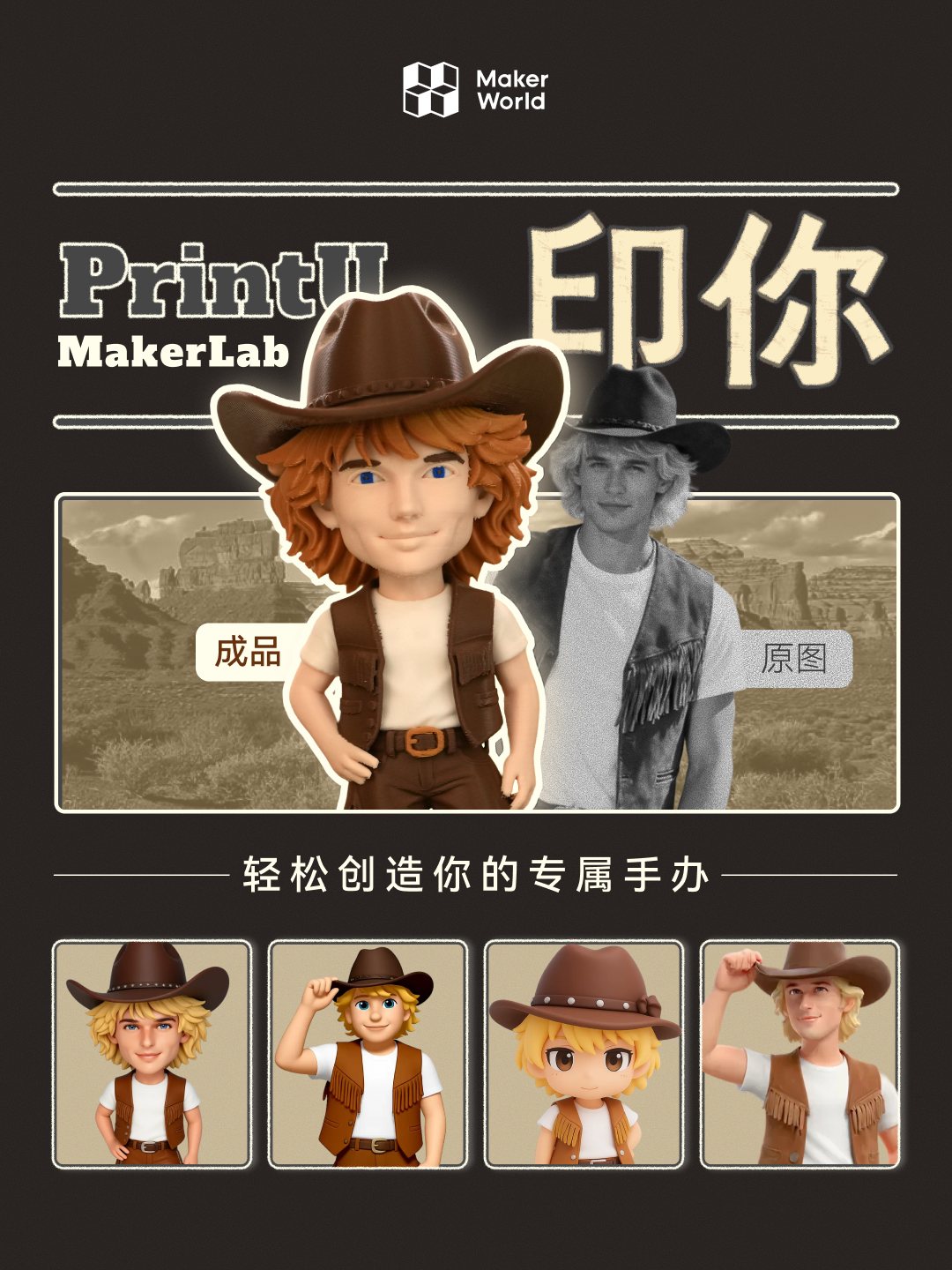
On December 12th, Tu Zhu 3D model platform announced its integration with Tencent’s Hunyuan 3D 3.0 large model. The partnership introduces a new tool called “Yin Ni,” which allows users to generate custom figurines effortlessly. This initiative aims to tackle common challenges in 3D modeling faced by everyday users and to make 3D printing more accessible for hobbyists and consumers alike.
The core technology underpinning this collaboration is based on Tencent’s Hunyuan 3D 3.0 model. Compared to previous versions, this model introduces the innovative 3D-DiT graded carving technology, increasing modeling precision by threefold. According to the developers, its geometric resolution now reaches 1536³ with support for ultra-high-definition modeling involving up to 3.6 billion voxels. Special enhancements have also been made to address typical issues with AI-generated models, such as facial abstraction and blurry details. The new technology can precisely reconstruct facial contours, as well as sharply render edges on joints and mechanical parts, while improving texture alignment and geometric accuracy to ensure that printed physical objects closely match their digital counterparts.
Building on this technological leap, the “Yin Ni” tool on the MakerWorld platform significantly simplifies the traditional process of creating figurines. Historically, crafting realistic figures was either expensive, requiring specialized scanning equipment, or time-consuming, demanding manual modeling. Now, users only need to upload a portrait photo, and the AI system automatically converts the 2D image into a detailed 3D model. This process includes generating a 3D stereo view, removing backgrounds, adding stylistic effects, and producing a model that accurately captures facial features, clothing, and stance—ready for direct 3D printing.
Currently, Tu Zhu MakerLab hosts over 20 modeling tools, including “Yin Ni,” serving more than two million users globally. The collaboration with Tencent marks a significant milestone, signaling how cutting-edge AI technology is rapidly transitioning from research labs into mainstream consumer applications. For 3D printing enthusiasts, this development translates into shorter design cycles and enhanced opportunities for personalized creative expression.
 ChatGPT
 Perplexity
 Gemini AI
 Grok AI