
Select Language:
How Large is Australia? A Deep Dive into the Land Down Under
1. Australia’s Vast Landmass: An Unmatched Perspective
Australia covers approximately 2.97 million square miles (7.69 million square kilometers), making it the sixth-largest country in the world. This expansive territory stretches across diverse landscapes, from golden beaches and lush rainforests to arid deserts and snowy mountains. Its sheer size influences many aspects of daily life and economic activity, drawing attention from travelers, investors, and environmentalists alike.
2. Comparing Australia to Other Countries
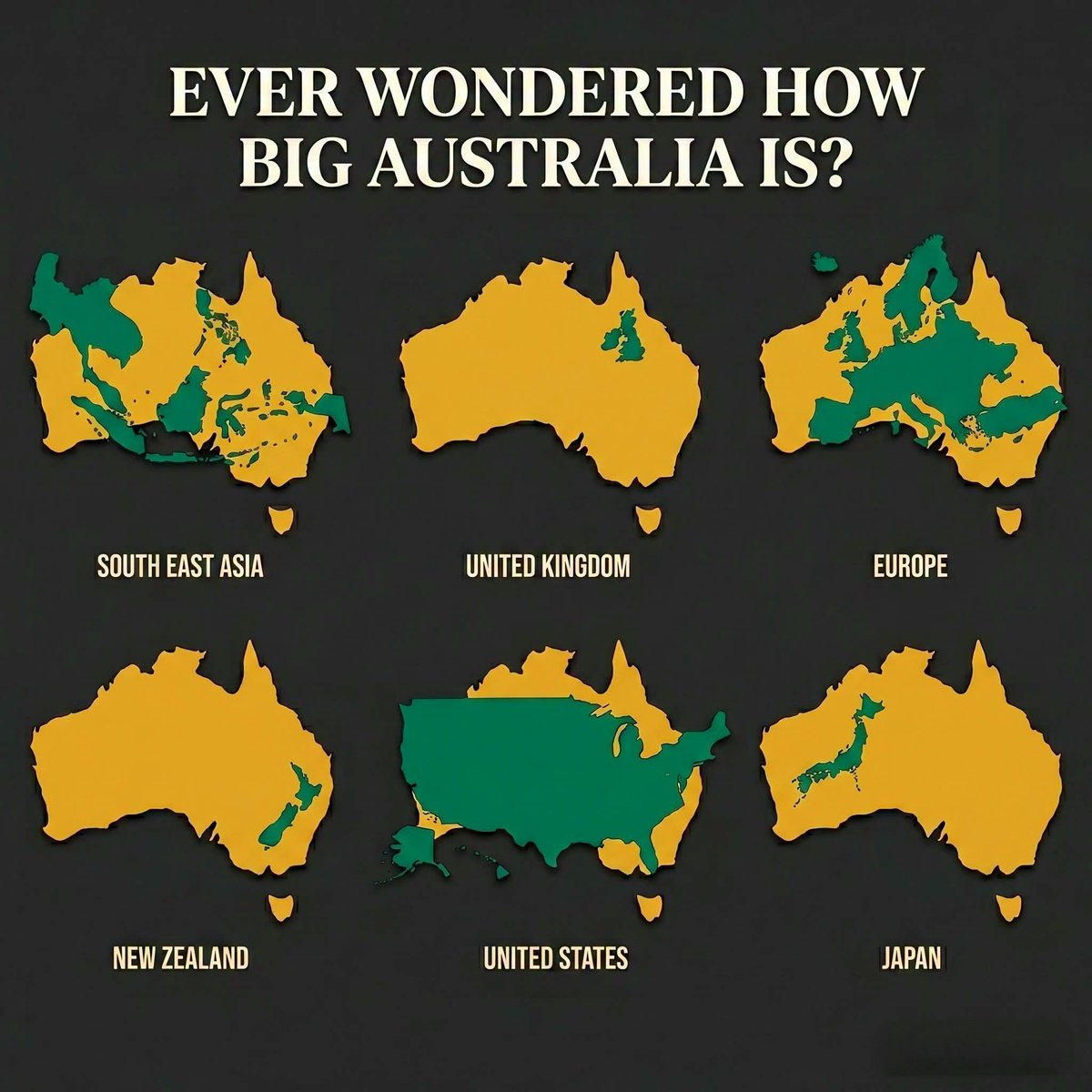
Unlike many nations, Australia is a continent-turned-country. If it were an independent nation, it would surpass many countries in landmass. For example, it’s about 14 times larger than the United Kingdom and roughly twice the size of India. Even more impressive, Australia’s territory is more extensive than the combined area of all European Union nations, emphasizing its scale in the global context.
3. Population Density: Wide Land, Small Population
Despite its vast size, Australia’s population hovers around 26 million residents as of 2025. This results in a population density of roughly 3.5 people per square mile (1.4 people per square kilometer). Such low density underscores the country’s expansive wilderness areas, making Australia one of the least densely populated nations in the world. Most residents inhabit urban centers along the coast, leaving large interior regions sparsely populated.
4. Geographic Features That Define Australia
Australia’s enormous size lends itself to incredible geographic diversity, which can be divided into several key regions:
- The Outback: Covering most of the interior, this arid and semi-arid region is famous for its rugged terrain and low population density.
- Coastal Regions: The eastern coast, including cities like Sydney and Brisbane, is densely populated and known for its beaches and bustling urban life.
- Great Barrier Reef: Off the northeastern coast, this UNESCO World Heritage Site spans approximately 1,430 miles, making it the largest coral reef system on Earth.
- Alpine Regions: The southeastern part of the country includes snowy mountains, particularly in the Victorian Alps and Tasmania.
5. Economic Impact of Australia’s Size
The vast landmass facilitates a variety of economic sectors, from mining and agriculture to tourism and services. Australia is a leading exporter of minerals like iron ore, coal, and gold. Its size allows for extensive farming in areas like the Murray-Darling Basin, which produces significant portions of the country’s food. Additionally, natural parks and outdoor attractions draw millions of tourists every year, contributing substantially to the economy.
6. Climate Variability Across the Land
The size of Australia results in a wide range of climate zones. Coastal areas enjoy temperate weather, ideal for tourism and urban life. The interior regions endure extreme heat and aridity, with temperatures often soaring past 100°F (38°C). The mountainous regions can experience snowfall, making them popular winter destinations. This diversity in climate emphasizes the country’s enormous geographical scope.
7. Conservation and Environmental Challenges
Given its size and ecological diversity, Australia faces significant environmental challenges. Remote regions are home to unique ecosystems that are sensitive to climate change, deforestation, and human activity. Protecting these areas, such as the Great Barrier Reef and the rainforests of Queensland, requires careful management strategies to preserve their natural beauty and ecological importance.
8. Future Prospects and Urbanization Trends
As Australia’s cities continue to grow, urban sprawl is a concern, especially around major metropolitan areas like Sydney, Melbourne, and Brisbane. The country’s vast territory offers opportunities for expansion and development, but sustainable planning is crucial to maintaining environmental health and quality of life. With technological advancements and innovative infrastructure, Australia aims to balance growth with conservation.
In summary, Australia’s impressive landmass isn’t just about size—it’s a key factor shaping its diverse ecosystems, vibrant cities, and economic prospects. Whether you’re interested in exploring its wild deserts or bustling metropolitan areas, understanding the country’s size provides valuable insight into what makes Australia unique on the world stage.
 ChatGPT
 Perplexity
 Gemini AI
 Grok AI