
Select Language:
Negotiations between top US and Iranian officials in Switzerland concluded on Monday, according to mediators, following a tense start marked by Tehran’s announcement of once again closing the Strait of Hormuz and President Donald Trump reiterating threats of military action against Iran.
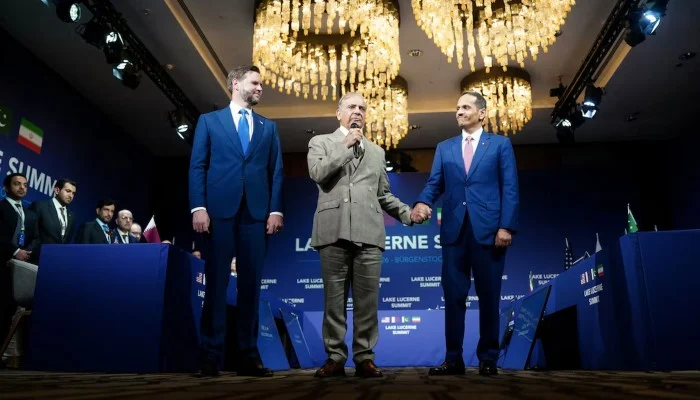
A combined statement from Pakistan and Qatar, acting as mediators, indicated that the US and Iran have agreed on a 60-day roadmap toward a final agreement. Technical discussions are scheduled to carry on throughout the week at the Swiss mountain retreat of Buergenstock, as per the statement released by Qatar’s foreign ministry.
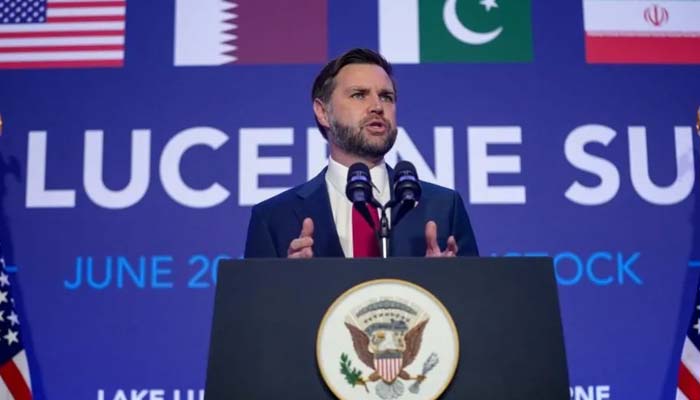
Both sides also committed to establishing mechanisms to halt hostilities in Lebanon and to opening channels of communication aimed at ensuring the safe passage of commercial ships through the Strait of Hormuz. The talks began with Vice President JD Vance discussing with Iranian officials on Sunday under an agreement to extend a fragile ceasefire from April for an additional 60 days, with discussions continuing into early Monday.
Iranian Foreign Minister Abbas Araghchi announced on social media that Tehran has secured waivers allowing oil and petrochemical exports, the release of some frozen assets, and the initiation of a reconstruction and development plan. The White House did not immediately comment on whether the talks had concluded.
Prior to the start of negotiations on Sunday, Fox News reported that Trump warned Iranian officials they “won’t have a country” if they attempt to close the Strait again. He also repeated an earlier threat that the US might take control of the waterway and impose a toll.
Trump supported last week’s memorandum to prevent a global economic downturn caused by the Strait’s closure, which had sent oil prices plunging to levels not seen since the conflict began on February 28 after US-Israeli strikes on Iran. Following the joint statement, Brent crude futures dropped over $1 to $79.44 per barrel.
Different reports emerged of the discussions. Iran’s semi-official Tasnim news agency cited an informed source indicating that after Trump’s threats became public, the Iranian delegation refused to return to the negotiation room, though communication persisted via Pakistani and Qatari mediators.
A US diplomat involved in the negotiations told Reuters that Iran’s refusal to leave the talks was ongoing and that discussions covered issues including the Strait, Lebanon, nuclear matters, and implementation of the MOU. The agreement outlined the reopening of the Strait of Hormuz and the cessation of hostilities in Lebanon, where Israel continues military strikes and Iran-backed Hezbollah fights back.
Iran claimed that the US had not fulfilled commitments made to cease fighting in Lebanon and stated it had once again halted maritime traffic through the strait. It emphasized that Sunday’s talks would not address nuclear developments. Vance downplayed violence in Lebanon, saying progress was made toward ending hostilities.
In the US, Trump threatened renewed military strikes if Iran does not restrain its allies—specifically targeting Hezbollah—demanding Iran stop funding these proxies. Despite these threats, Vance reported that Trump had asked officials to seek a new approach to improve relations with Iran.
Diplomats indicated that discussions included clarifying confusing Iranian messages about the Strait and establishing mechanisms to keep the Strait open.
Despite a recent ceasefire announcement in Lebanon, ongoing violence persists. Iran said it had closed the Strait again Saturday, after nearly four months of closure severely disrupting global energy supplies. Data showed only five ships passing through on Sunday, a sharp decline from previous days, with some vessels possibly hiding transponders in transit.
Lebanon experienced relative calm on Sunday after intense Israeli strikes and Hezbollah’s retaliation. Over a million residents have fled their homes since Israel’s invasion in March targeting Hezbollah fighters supporting Tehran. Reuters journalists in southern Lebanon observed significant traffic returning, with residents and Hezbollah supporters on the roads.
 ChatGPT
 Perplexity
 Gemini AI
 Grok AI