Select Language:
Nearly 80% of the world’s poorest, approximately 900 million people, are directly vulnerable to climate-related hazards worsened by global warming, the United Nations cautioned Friday. This exposes them to a “double and profoundly unequal burden.”
“Everyone is affected by the increasingly frequent and intense effects of climate change, such as droughts, floods, heatwaves, and air pollution, but it is the most impoverished among us who endure the most severe impacts,” stated Haoliang Xu, acting head of the UN Development Programme, in an AFP statement.
He emphasized that COP30, the UN climate conference scheduled in Brazil this November, “is the moment for world leaders to view climate action as a pathway to combat poverty.”
An annual report released by the UNDP in partnership with the Oxford Poverty and Human Development Initiative reveals that about 1.1 billion people—roughly 18% of the 6.3 billion individuals surveyed across 109 countries—live in “severe multidimensional” poverty. This measure considers factors such as infant mortality rates, housing quality, sanitation, access to electricity, and education, with half of those affected being children.
A stark example highlighted in the report is Ricardo, a member of Bolivia’s Guarani Indigenous community living near Santa Cruz de la Sierra. Ricardo survives on a modest income as a day laborer and shares his small house with 18 relatives, including his three children, parents, and extended family. The home has only one bathroom, a kitchen fueled by wood and coal, and none of the children are attending school.
The report states, “Their lives mirror the multidimensional facets of poverty.”
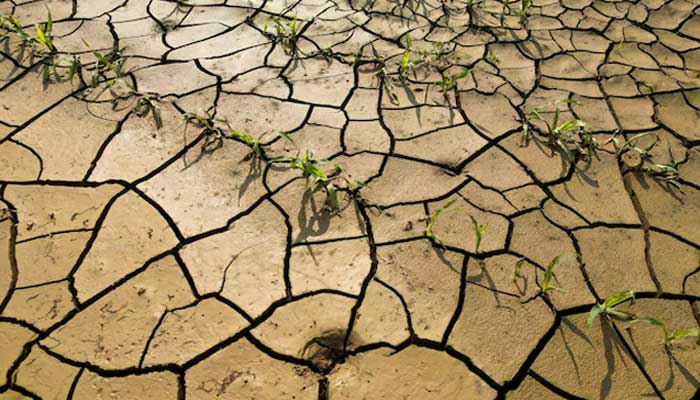
Focusing on regions such as sub-Saharan Africa and South Asia, the report underscores their vulnerability to both poverty and climate change impacts. It elaborates on the link between poverty and exposure to environmental risks like extreme heat, drought, floods, and air pollution.
“Poor households are especially vulnerable to climate shocks, many relying on fragile sectors like agriculture and informal labor,” the report notes. “When hazards collide or recur, they deepen existing hardships.”
It further reveals that almost 887 million people—about 79% of impoverished populations—face at least one of these threats. Specifically, 608 million suffer from extreme heat, 577 million are affected by pollution, 465 million are impacted by floods, and 207 million face drought conditions.
Nearly 651 million individuals are exposed to multiple risks simultaneously; 309 million are affected by three or four hazards, and 11 million have experienced all four within a single year.
“Concurrent poverty and climate hazards represent a global challenge,” the report emphasizes.
While some progress has been made to reduce poverty in South Asia, nearly all of its impoverished population—99.1%—is vulnerable to at least one climate-related risk. Experts stress the need for a new approach that balances aggressive poverty alleviation with innovative climate solutions.
As the planet continues to warm at an unprecedented rate, these issues are expected to intensify, disproportionately impacting the world’s poorest nations. The report advocates for a shift from mere acknowledgment to swift, decisive action, emphasizing that protecting people and the environment must go hand-in-hand.
 ChatGPT
 Perplexity
 Gemini AI
 Grok AI