
Select Language:
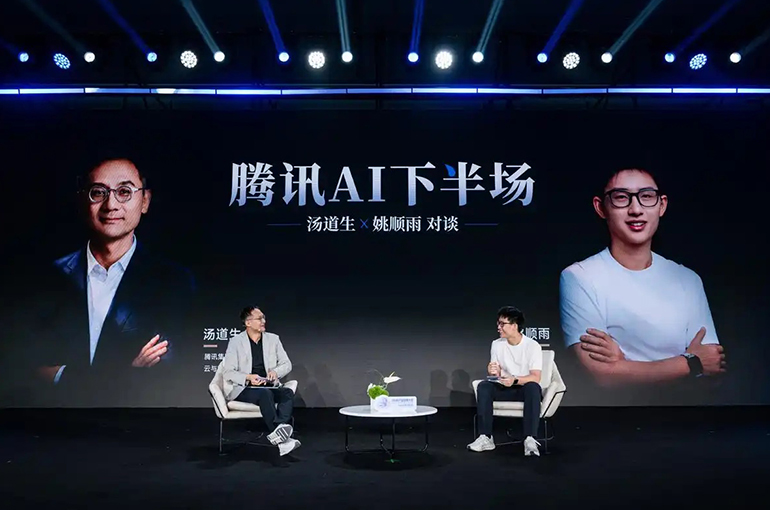
Tencent, the Chinese internet giant known for its widely used messaging app, has dismissed claims that it has been slow to develop artificial intelligence.
“AI is a long-term game,” said the company’s chief AI scientist during the annual AI product launch and strategic event. “In many ways, the second half of the AI race is just beginning. ChatGPT and Claude won’t be the only major players, and new opportunities will continue to emerge.”
He emphasized the importance of establishing an organization in China dedicated to artificial general intelligence—an advanced form of AI capable of matching or surpassing human abilities across nearly all domains. Such an organization should be built around a balanced framework of robust foundational technology, valuable product development, and a pioneering spirit of innovation.
Despite widespread speculation in Silicon Valley that rapid AI advancements could lead to widespread job losses within two years, he noted that the perspective should be more measured. “Many think AI will quickly replace human workers, but we believe this is a long-term development,” he stated.
One of his key projects has been improving the company’s Hy3 large language model, which has undergone three major enhancements. The infrastructure supporting the model—including its architecture for pre-training and reinforcement learning—has been rebuilt. Additionally, data and evaluation systems have been upgraded to focus more on solving real-world problems and boosting data quality. The model now makes more human-like decisions, such as hiring, setting development priorities, and balancing various trade-offs based on “taste.”
He also pointed out a common issue in China’s AI sector: the overemphasis on leaderboard rankings. He stressed that practical applications and real-world usefulness should be prioritized over merely gaming competition metrics.
During the event, a senior Tencent executive revealed that most of the company’s code development this year is being handled by AI. This shift allows engineers to devote more time to designing system architecture, while AI takes care of the bulk of coding tasks, with engineers providing ongoing supervision and adjustments.
 ChatGPT
 Perplexity
 Gemini AI
 Grok AI