
Select Language:
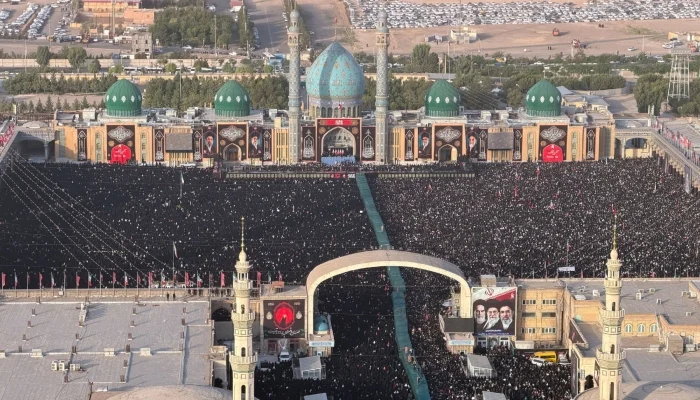
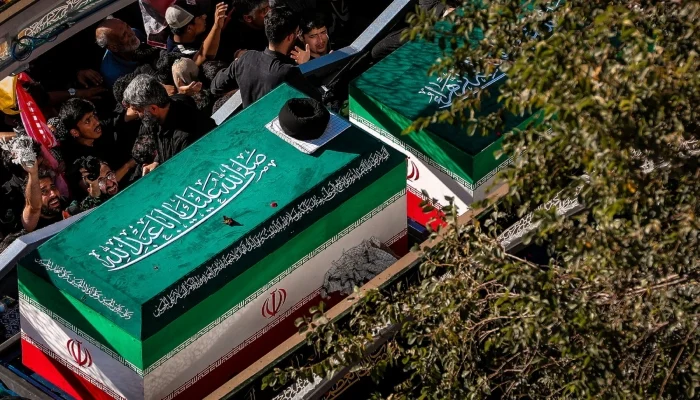
An Iranian vehicle escorted the coffin of the late Supreme Leader Ayatollah Ali Khamenei, who was killed on February 28 in Israeli and US airstrikes. The coffins of his family members were also present during their burial, marking a large funeral procession in Mashhad, Iran, on July 9, 2026. — Reuters
– Iran claims to have targeted US facilities in Kuwait, Qatar, and Bahrain.
– Iranian officials report US strikes resulted in 14 deaths and 78 injuries.
– President Trump states he does not foresee these strikes escalating into a full-scale war.
Iranian forces launched retaliatory attacks on US military sites across Gulf nations following US airstrikes on southern and eastern Iranian regions, complicating a ceasefire that had been in place for three weeks. Later reports indicated multiple explosions throughout southern Iran, including near Bushehr—the location of a nuclear power plant—as well as in Konarak, Choghadak, and Bandar Abbas. The US military didn’t immediately comment on these incidents.
Today also marked the burial of Iran’s slain Supreme Leader, Ayatollah Ali Khamenei, at a shrine in Mashhad, wrapping up a week of funeral gatherings that drew massive crowds. Khamenei was killed in a US airstrike on February 28, coinciding with the outbreak of conflict that has persisted for months, resulting in thousands of deaths and destabilizing global energy markets. Earlier this week, attacks on shipping vessels linked to Qatar and Saudi Arabia disrupted fragile peace talks, leading President Trump to declare the truce “over.”
During Khamenei’s funeral, large crowds gathered at the most sacred shrine, some bearing banners condemning President Trump and threatening violence against him. Iran’s Revolutionary Guards Navy stated that US efforts to reroute shipping through the Strait of Hormuz have hindered the waterway’s gradual reopening. They reported that about half of the vessels normally transiting the Strait are now doing so under Iranian oversight, only on routes approved by Tehran. The Guards warned that any further US actions would be met with a “crushing” response.
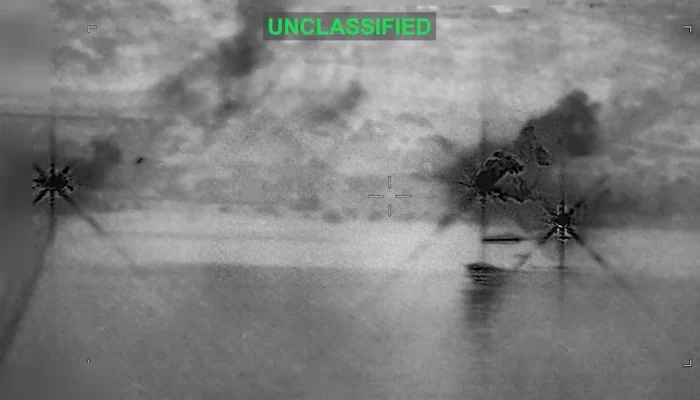
The US military explained its recent strikes aimed to keep the Strait of Hormuz open after Iran reportedly attacked three tankers in the area. These strikes occurred shortly after Trump suggested the interim ceasefire was over. While Iran hasn’t officially claimed responsibility for the attacks on ships, analysts believe Tehran uses such incidents to strengthen their negotiating position.
Oil prices, which surged due to fears of disrupted shipping and supply, declined Thursday amid hopes that the escalation might be temporary or that the ceasefire could still hold. Iranian officials reported that US strikes on July 8 and 9 caused 14 deaths and injured 78 across five provinces. The Fars news agency also indicated one US airstrike hit a rail bridge used for trade with Russia and China.
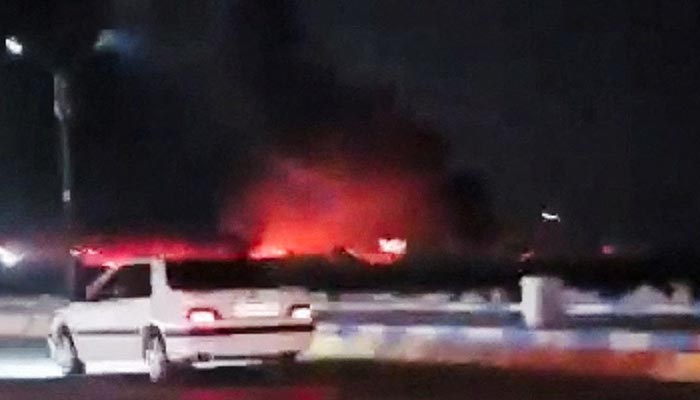
Multiple explosions were reported in Bushehr province and Bandar Abbas, a port city, on Thursday. Bushehr hosts a Russian-built nuclear reactor, and local authorities later confirmed a US projectile struck the plant’s perimeter, which had already been targeted multiple times before a ceasefire was established in April.
Iran’s military announced the launch of attacks on US Patriot missile systems in Kuwait, an early-warning site in Qatar, and a US fuel depot in Bahrain. Kuwait reported engagement with a cruise missile, three ballistic missiles, and ten drones, resulting in one injury from shrapnel. Sirens sounded in Jordan following Iranian missile launches; eight were intercepted, with no casualties or damage.
The Revolutionary Guards later claimed Iran fired ten ballistic missiles at Jordan’s Azraq military base—used by US troops—and a US-controlled command center in the Middle East, without providing further details. Qatar, which hosts the region’s largest US base and often mediates between Washington and Iran, strongly condemned the attacks on commercial shipping but called for diplomacy to resume. Similarly, Turkey and Oman’s foreign ministers emphasized the importance of avoiding further military escalation during separate discussions with Iranian officials. Pakistan also engaged diplomatically, with Iran’s Abbas Araqchi condemning US “warmongering policies.”
Before the war, the Strait of Hormuz was a crucial conduit for about 20% of global oil supplies. Tehran has largely gained control over it, creating a stalemate in its confrontation with the world’s most powerful military.
Iran’s top negotiator, Mohammad Baqer Qalibaf, stated on X (formerly Twitter) that the Strait would only reopen under Iranian conditions, rejecting US threats.
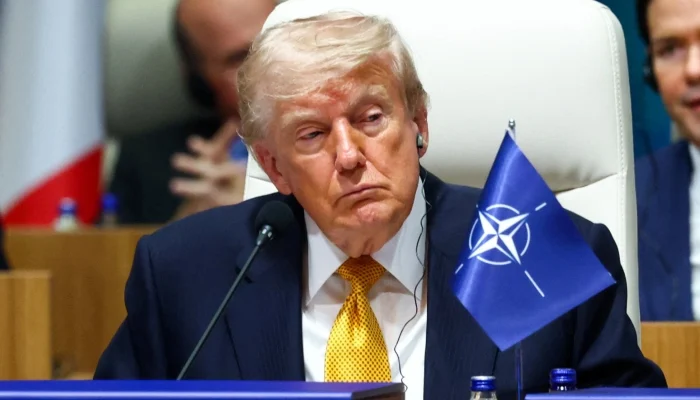
President Trump, while attending a NATO summit in Turkey, claimed that US forces struck approximately 90 Iranian military targets, including air defense, coastal surveillance, missile, and drone storage sites, in response to Iranian attacks on ships. He expressed confidence that the situation would not escalate into full-scale war, assuring that any conflict would be brief and that it could even benefit oil markets. When asked if the Iran ceasefire was over, Trump responded negatively, indicating he did not wish to continue diplomatic dealings with Iran.
 ChatGPT
 Perplexity
 Gemini AI
 Grok AI