
Select Language:
In 2025, the number of global conflicts involving states reached its highest level since World War II, according to a Norwegian study published on Tuesday. Experts warn this surge has led to an increase in violence against civilians. The annual “Conflict Trends” report by the Peace Research Institute Oslo (PRIO) states that 65 conflicts involving at least one government entity were documented last year, marking a peak since 1946.
The data also shows a record number of interstate conflicts for the past 80 years, doubling from the previous year to eight. These include border clashes between India and Pakistan, Afghanistan and Pakistan, Cambodia and Thailand, along with Russia’s invasion of Ukraine and Israeli military actions against Syria.
“Unfortunately, there’s not much positive to report,” said researcher Siri Aas Rustad to various media outlets, including AFP. “Usually, I find some silver lining, but this year the numbers are quite shocking.”
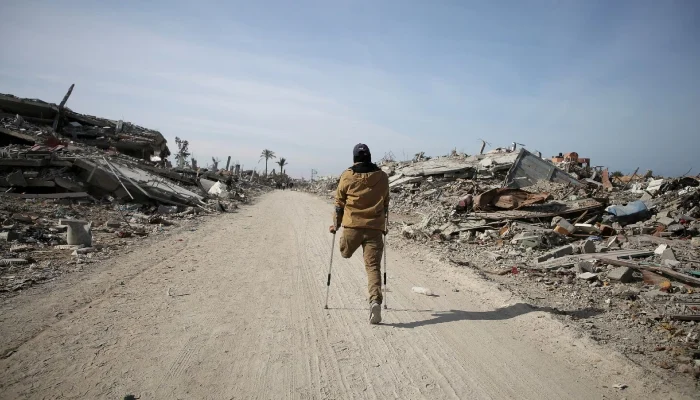
Last year ranked as the third deadliest since the Cold War ended, with approximately 245,000 deaths from direct combat or political violence. Of these, nearly 76,500 were civilians targeted specifically in attacks, compared to around 14,200 in 2024. A significant rise in civilian casualties is tied to the ongoing conflict between the military and paramilitary groups in Sudan, where sieges and massacres in El-Fasher, in the Darfur region, are believed to have killed around 60,000 people.
Since the Cold War’s conclusion, only 1994 and 2021 have seen higher casualties due to the Rwandan genocide and the Ethiopian Tigray conflict, respectively.
Africa continues to be the most affected region by conflicts involving at least one state, with 29 such disputes, followed by Asia, the Middle East, the Americas, and Europe. Rustad highlighted Israel as an especially aggressive country at present, citing its involvement in various conflicts across Gaza, Syria, Lebanon, Iran, and Yemen’s Houthi rebels.
She also pointed to the U.S., noting that the return to power of President Donald Trump has not only escalated violence but also increased trade restrictions. “We’re shutting down cooperation. The UN Security Council isn’t functioning effectively, and the world is becoming more polarized,” Rustad added.
 ChatGPT
 Perplexity
 Gemini AI
 Grok AI