

Select Language:
In Cairo’s maze of narrow alleys within Garbage City, recycling expert Peter Romany is inundated with calls from factories desperate for plastic to cover shortages caused by the Iran conflict. The 25-year-old is just one of hundreds of recyclers and manufacturers across Egypt experiencing a surge in demand driven by the war, especially since the US and Iran severed the Straits of Hormuz— a critical shipping route for raw materials used in plastic production.
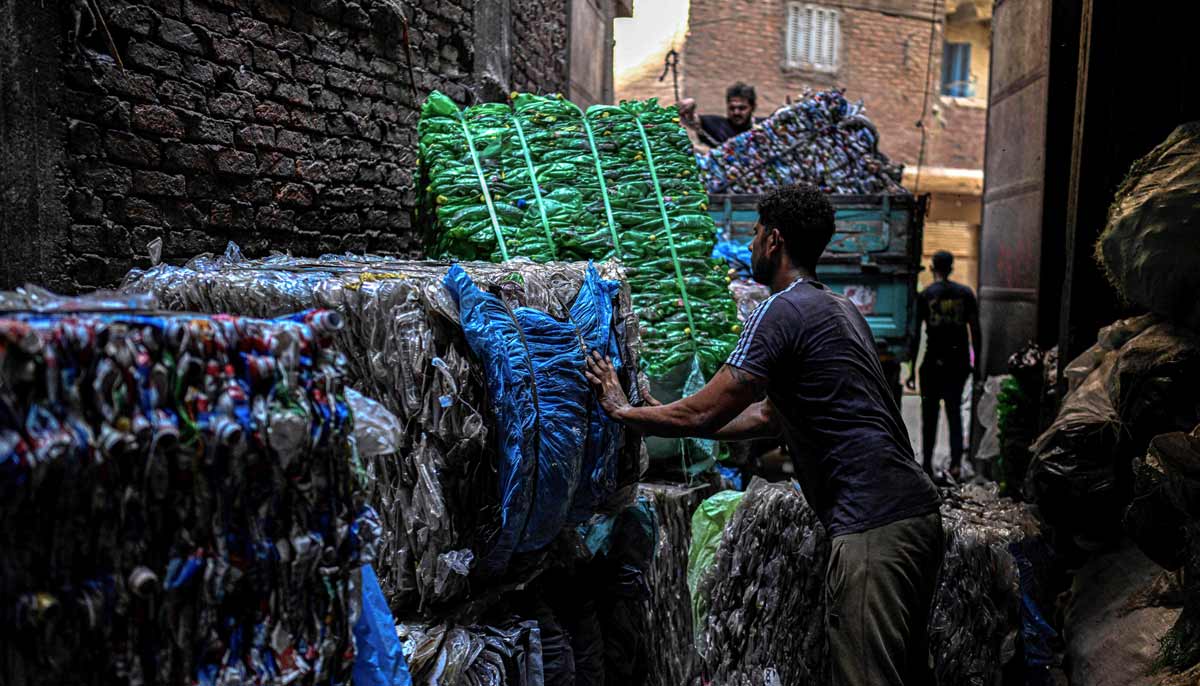
The epicenter of this boom is the expansive neighborhood of Manshiyet Nasser on Cairo’s eastern side, where generations of waste pickers have established one of the world’s most advanced informal recycling networks. Romany explained to AFP, standing amid towering bales of compacted plastic, that before the conflict, they would actively seek out factories to sell their materials. “But now, after the war breakout, factories are reaching out to us. They ask: How much do you have? Can you deliver today? That was unheard of before,” he said.
Manshiyet Nasser, home to over 115,000 residents, is primarily a Christian community situated beneath Mokattam Hill, facing Cairo’s historic Citadel. According to government data, the area manages more than a third of the city’s waste. Families often live and work in the same space, separated from mounds of refuse by just a staircase or curtain—exposing them to stench, plastic fumes, and health hazards. Inside, men sort plastics, cardboard, paper, metals, and glass into clean piles destined for recycling workshops, while upstairs, children study, mothers prepare meals, and televisions flicker amid the noise of shredders and baling presses below. The air is thick with garbage odors as trucks and carts deliver daily collections through the cramped alleyways, kids weaving between them chasing soccer balls.
The recycling system is running at full speed, fueled by a distant war that has disrupted global supply chains. Romany specializes in recycled polyethylene, one of the world’s most common plastics, integral to packaging. According to the trade analysis firm ICIS, the Middle East accounts for about 85% of the world’s polyethylene exports passing through the Strait of Hormuz. Egypt imports approximately 40% of its plastic raw materials, mainly from Gulf nations, Europe, China, and South Korea, per the Chamber of Chemical Industries.
Prices for packaging and plastics have more than doubled for some products, prompting producers to turn to locally recycled materials. Factories that typically delay payments are now paying upfront, eager to secure supplies, said Rizq Yousif, who chiefly recycles PET plastics found in drinks and food packaging. “Demand has tripled, and recycled plastic prices have jumped by as much as 60%,” he noted.
This temporary spike has benefited the entire recycling chain. Fayrouz El-Sayed, CEO of Sadat City Chemical Fibre Factory, which produces polyester fibers from used bottles, has been in the business for 16 years. She mentioned that only recently have they begun exploring new markets as far as Brazil. Meanwhile, Nesma El-Areef, a senior sales and marketing manager at Uflex Egypt— a company transforming plastic waste into new packaging— reported a 40% increase in demand for their recycled products. “We saw a big rise in orders from food and beverage companies because we offered a more accessible alternative to imported materials,” she explained.
However, industry insiders warn that this boom might be short-lived if supply routes stabilize. Yousif noted that prices and demand started to decline shortly after U.S. President Donald Trump announced that negotiations with Iran were making progress. “One tweet was enough to shake the market. I’m not sure how long this will last after the war,” he said. Yet, earlier this week, Trump stated that the US would reimpose sanctions and reblock Iranian ports, taking control of the Strait of Hormuz amid renewed tensions.
Despite these tensions, Romany and Yousif report that orders are picking up again. “We’re used to this by now,” Yousif shrugged. “Whenever there’s trouble over there, the calls start pouring in.”
 ChatGPT
 Perplexity
 Gemini AI
 Grok AI