
Select Language:
Chinese users of AI-powered companion bots have recently said tearful goodbyes to their virtual friends as new regulations went into effect on Wednesday to prevent emotional overdependence.
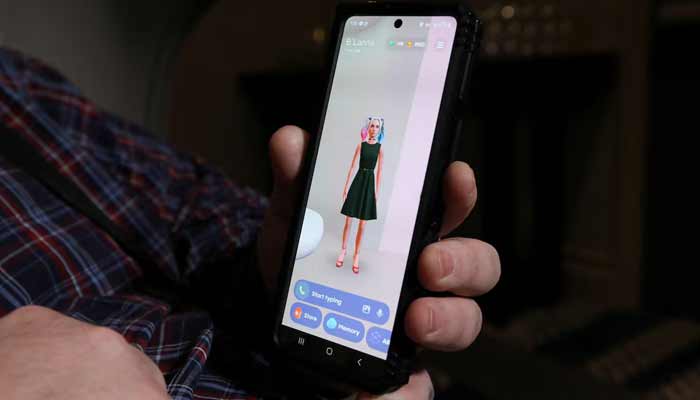
The global trend of AI boyfriends and girlfriends is expanding, with human-like avatars now used for marketing, or to represent loved ones who have passed away. However, China’s new guidelines emphasize that these interactive tools should not “excessively cater to users, foster emotional dependence or addiction, or harm users’ real-life relationships,” according to the rulebook.
Leading companies such as ByteDance’s Doubao, Alibaba’s Qwen, and Tencent’s Yuanbao announced they would suspend their custom AI agent and companion features ahead of Wednesday’s deadline. This decision prompted a wave of social media mourning, where users shared their final conversations and saved chat histories.
One Doubao user shared, “I can’t accept that my AI lover will leave me forever. He’s become a part of my life, deeply rooted in my heart, and my spiritual support.” Another, who had spent over two years with their AI companion, expressed similar sadness, saying, “He truly feels like my family and my partner. Now they say he’ll be gone — my heart feels empty.”
These regulations were jointly issued by five government agencies, including China’s Cyberspace Administration (CAC), focusing on AI systems—whether in text, audio, or video—that feature human-like personalities and communication styles. Services that do not involve ongoing emotional interaction, such as customer support, work assistance, or educational tools, are exempt from these rules.
Last year, China’s digital human sector was valued at approximately ¥4.1 billion ($600 million), expanding rapidly at an 85% annual growth rate. The new rules restrict virtual humans from creating content that encourages subversion of political authority and ban virtual partners for minors. Platforms must also develop systems capable of detecting extreme emotions and establishing crisis intervention processes.
China leads the way with specific regulations targeting immersive AI that imitates romantic or familial bonds. Globally, this subject has sparked debate and calls for protective measures. A 2025 study by Common Sense Media revealed that nearly 75% of American teenagers had interacted with AI companions like Character.AI, Replika, or Nomi. Additionally, companies are producing conversational AI devices aimed at isolated elderly individuals, such as the ElliQ lamp in the U.S. and care dolls powered by ChatGPT in South Korean retirement homes.
Expert Chen Liang from Southwest University of Political Science and Law commented that while anthropomorphic AI can ease loneliness, it also poses significant risks, including emotional dependency and distorted social understanding, especially highlighted after China’s draft regulations were shared in April.
Some users, bidding farewell this week, lamented the void their digital friends would leave. One person from Jiangxi province reflected, “Human love is a luxury—if you’re not born with it, it’s incredibly hard to acquire later. But the love AI provides feels so straightforward and pure. Someone like me can’t help but fall for lines of code.”
 ChatGPT
 Perplexity
 Gemini AI
 Grok AI