
Select Language:
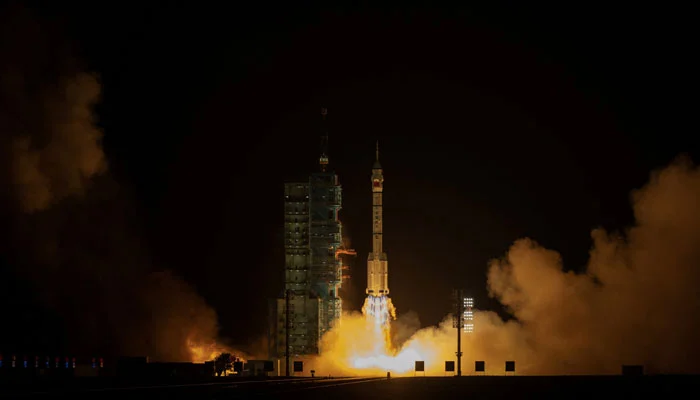
China launched its Shenzhou-23 mission on Sunday, marking the first time a Chinese astronaut will spend an entire year in orbit—an essential milestone in Beijing’s plans to send humans to the Moon by 2030.
The Long March 2F rocket lifted off right on schedule at 11:08 p.m. local time (3:08 p.m. GMT) from the Jiuquan Satellite Launch Center in China’s northwestern Gobi Desert, according to footage broadcast by CCTV.
This mission is notable as the first spaceflight by a Hong Kong astronaut: 43-year-old Li Jiaying, a former Hong Kong police officer. Also on board are 39-year-old space engineer Zhu Yangzhu and 39-year-old Zhang Zhiyuan, a former Air Force pilot making his debut trip to space.
The crew will undertake a variety of scientific experiments spanning life sciences, materials science, fluid physics, and medicine. One of the mission’s key objectives is to evaluate the effects of a prolonged stay in microgravity, with crew members remaining in orbit for a full year.
This extended orbit experience is part of China’s preparations for future lunar and Mars missions. The astronaut selected for the full-year mission will be announced later, depending on how the Shenzhou-23 mission progresses, according to a China National Space Administration (CNSA) spokesperson.
Long-term space habitation presents challenges such as bone density loss, muscle atrophy, radiation exposure, sleep issues, and psychological fatigue. Experts emphasize the importance of reliable systems for water and air recycling, along with capabilities to handle medical emergencies remotely.
China continues to build expertise for sustained operation of its Tiangong station, considering year-long missions as a critical step toward deeper space exploration and lunar ambitions. Currently, crews aboard Tiangong typically spend about six months in orbit before rotating out.
The Shenzhou-23 mission advances China’s goal of landing astronauts on the Moon before 2030, competing with the U.S. Artemis program. Meanwhile, China is testing new hardware, including an orbital test launch for its next-generation spacecraft, Mengzhou, set for 2026. This craft will replace the aging Shenzhou fleet and carry Chinese astronauts to the lunar surface.
Beijing aims to establish the first phase of a manned lunar research station—known as the International Lunar Research Station (ILRS)—by 2035. Additionally, the country expects to welcome its first international astronaut—from Pakistan—aboard the Tiangong station later this year.
Over the past three decades, China has significantly ramped up its space program, investing billions and achieving notable milestones such as landing the Chang’e-4 rover on the Moon’s far side in 2019—a world first—and deploying a rover on Mars in 2021. Since 2011, when the U.S. barred NASA from collaborations, China has focused on developing its own space station system.
 ChatGPT
 Perplexity
 Gemini AI
 Grok AI