
Select Language:
The Evolution of Paper Dimensions: Key Standards in 2025
Understanding the Most Common Paper Sizes in America and Globally
In today’s digital age, paper remains a fundamental component of business, education, and personal life. Yet, the sizes of paper used around the world can vary significantly, often leading to confusion. Below, we explore the most prevalent standards, their dimensions, and why they matter in 2025.
U.S. Letter Size: The American Standard
The U.S. Letter size continues to dominate in software settings, offices, and households across the United States. Its dimensions are:
- Width: 8.5 inches
- Height: 11 inches
In metric measurements, this translates to 215.9 mm x 279.4 mm. This size is standard for printing documents, letters, and reports. Its popularity stems from historical conventions and the widespread use of North American office equipment designed around these dimensions. The U.S. Letter size has remained relatively unchanged despite the rise of digital communication, emphasizing its importance in traditional document handling.
International Standard: A4
Globally, the A4 size is the most common paper dimension, especially throughout Europe, Asia, and other regions adopting the ISO 216 standard. Its specifications are:
- Width: 8.27 inches
- Height: 11.69 inches
Converted to metric, this measures 210 mm x 297 mm. A4 is the backbone of offices and printing environments worldwide, supporting everything from letters to official documents and academic papers. Its size is optimized for readability and efficient use of space, making it the default choice for many countries outside North America.
The Impact of the Different Standards in Today’s World
With increasing globalization and international collaboration, the variance between U.S. Letter and A4 can sometimes cause logistical issues. For example, printing and sharing documents across borders often requires resizing or adjusting files, especially in multinational organizations.
The use of both standards has also influenced the design of printers, copiers, and office supplies, which are typically calibrated for these sizes. As organizations embrace digital workflows, the physical size of paper becomes less critical but still plays an important role in formal documentation, legal paperwork, and printing needs.
Why Paper Sizes Matter in 2025
Despite the digitization of communication, print remains a key part of legal, academic, and administrative processes. Proper paper sizing ensures:
- Efficiency: Correct dimensions prevent paper jams and save costs.
- Legal Compliance: Many countries have specific standards for official documentation.
- Global Compatibility: Helps in reducing errors when exchanging documents internationally.
- Ergonomics: Suitable sizing enhances readability and usability.
In 2025, understanding these standards not only benefits professionals but also promotes smoother communication and efficiency across borders.
Visual Comparison of Paper Sizes
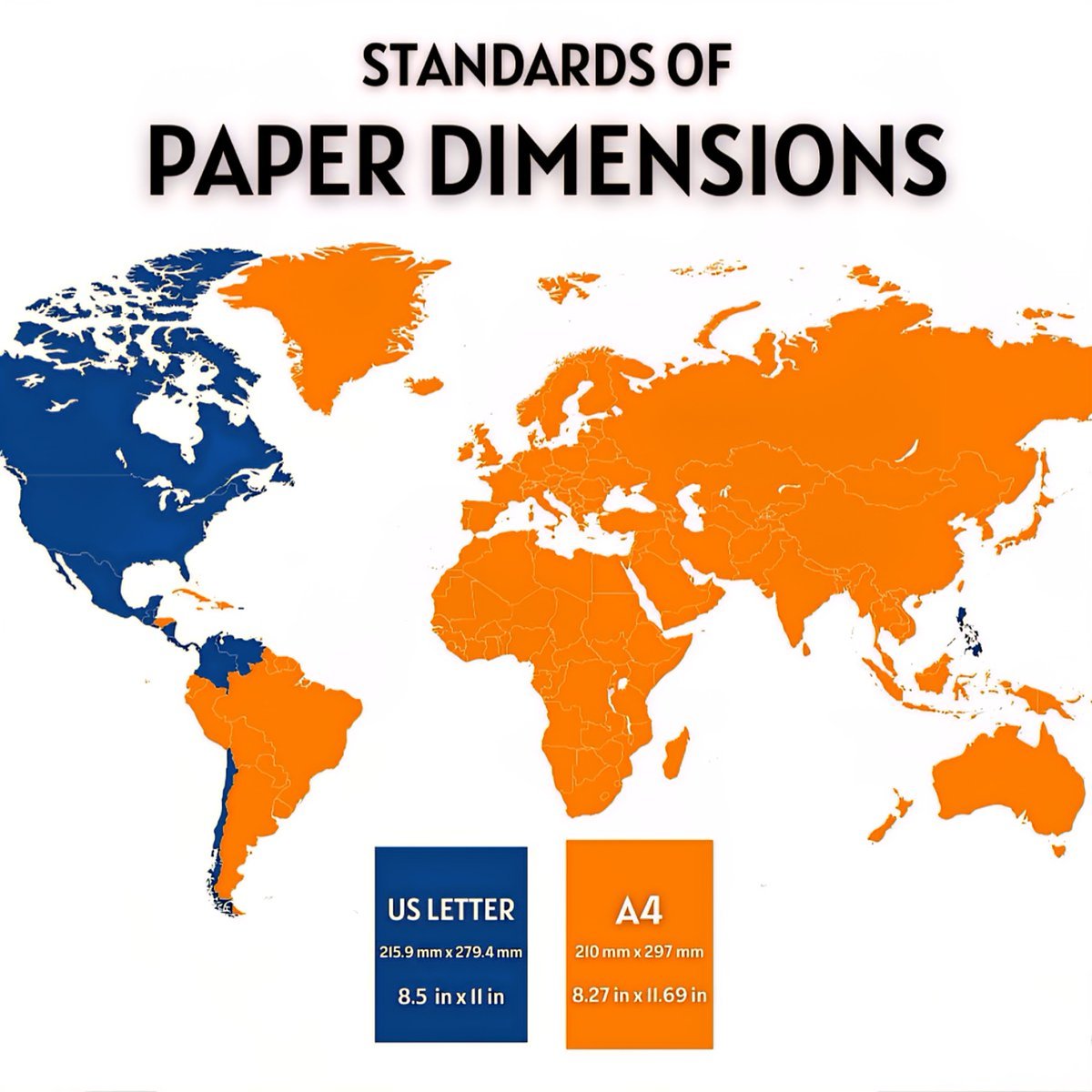
This illustration showcases the dimensions of U.S. Letter and A4 sizes side by side, highlighting the differences and similarities in their proportions.
The Future of Paper Standards: Trends and Prospects
As the world moves further towards digital documents and online communication, the physical standards of paper might become less relevant. However, industries such as legal, education, and government will continue to rely on traditional sizes for formal purposes. Moreover, manufacturers are increasingly designing products compatible with both standards, ensuring versatility in a globalized economy.
In conclusion, understanding paper dimensions like U.S. Letter and A4 remains vital in navigating the complexities of international standards, printing efficiency, and legal compliance in 2025. Whether digital or print, knowing these sizes helps streamline workflows and enhances clarity across communications worldwide.
 ChatGPT
 Perplexity
 Gemini AI
 Grok AI