
Select Language:
Most Confusing Flag Pairs in 2025: A Closer Look
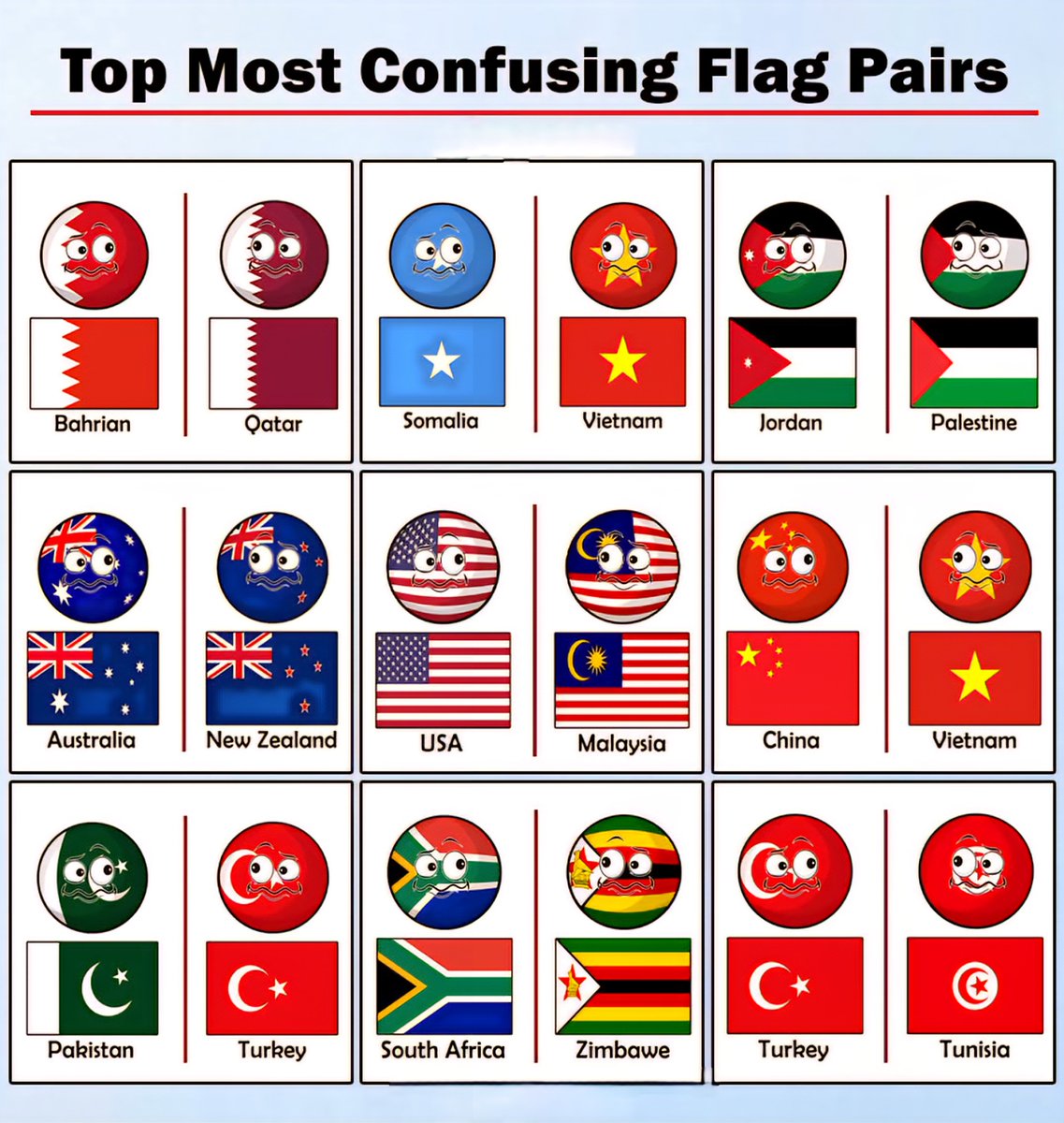
When it comes to vexing visual symbols, flags often lead the charge with their intricate designs and shared color schemes. For travelers and geopolitics enthusiasts alike, deciphering the differences between similar flags can be more perplexing than initially expected. Here, we explore some of the most confusing flag pairs of 2025—a list designed to test your knowledge and challenge your assumptions.
1. Romania vs. Chad: The Great Color Swap
One of the most common confusions involves Romania and Chad. Both nations have vertical tricolor flags composed of blue, yellow, and red. The key difference lies in their color order:
- Romania: The flag’s colors from hoist to fly are blue, yellow, then red.
- Chad: The sequence is identical, but the shades of blue and red are subtly different, with Chad’s blue being slightly darker.
Despite the color order being the same, the shades matter. The confusion is compounded by close proximity and similar cultural aspects, often leading to mistaken identity in international media.
2. Ireland vs. Ivory Coast: The Green Octagonals
While not directly similar in design, both Ireland and Ivory Coast sport flags featuring green, orange, and white. The key distinctions:
- Ireland: A vertical tricolor with green on the hoist, white in the middle, and orange on the fly.
- Ivory Coast: A vertical tricolor with orange on the hoist, white in the middle, and green on the fly.
The color order is reversed, but the similarities in the layout can easily lead to mix-ups, especially in crowded international events or when seen from afar.
3. Netherlands vs. Luxembourg: The Horizontal Challenge
Both countries boast horizontal tricolors with red, white, and blue bands:
- Netherlands: Red on top, white in the middle, blue at the bottom.
- Luxembourg: The same color order but with a different shade of blue and a thinner stripe for Luxembourg.
The subtle shade differences and the ratio of their stripes often cause confusion, especially for those unfamiliar with European flags.
4. Serbia vs. Slovakia: Similar but Not Alike
Serbia and Slovakia both feature horizontal stripes with red, white, and blue. Here’s what makes their flags tricky:
- Serbia: The flag has a red, blue, and white layout with a coat of arms on the hoist side.
- Slovakia: Similar flag design but with a double horizontal stripe and a Slovak coat of arms centered on the left third of the flag.
It’s the specific shade of blue and detailed emblems that distinguish Slovakia from Serbia, but casual observers often mistake one for the other.
5. Indonesia vs. Monaco: The Bicolor Similarities
The flags of Indonesia and Monaco are nearly identical, both featuring a simple two-color bicolor:
- Indonesia: Red on top and white on the bottom.
- Monaco: Same color scheme, but the proportion of the stripes differs, with Monaco’s flag being slightly narrower.
Additionally, the flags are often mistaken due to their minimalist design, especially in racing events and international forums.
6. Russia vs. Croatia: The Tricolor Mix-Up
Although quite distinct in design, these flags can be confused because of their color patterns:
- Russia: Horizontal stripes of white, blue, and red.
- Croatia: A horizontal triband of red, white, and blue with a checkered coat of arms in the center.
In certain contexts, especially when the coat of arms isn’t visible or is obscured, these flags can be mistaken for each other, particularly by casual observers or in low-resolution images.
7. Australia vs. New Zealand: Union Jack and Stars
Both flags feature the Union Jack and stars but differ subtly:
- Australia: Blue background with the Union Jack, a large seven-pointed star (the Commonwealth Star), and the Southern Cross constellation.
- New Zealand: Similar layout but with a different arrangement of stars representing the Southern Cross, and the placement of the Union Jack.
In crowded settings, these details might be overlooked, leading to misidentifications.
8. The Confusing Nordic Duo: Denmark vs. Norway
Both Scandinavian countries display red flags with white symbols:
- Denmark: Features a white Scandinavian cross that extends to the edges.
- Norway: Similar pattern but with a larger cross and a different shade of red.
While visually similar, slight differences in the size and placement of the cross make them distinguishable upon closer inspection.
9. United Kingdom vs. Cook Islands: The Union Jack Effect
While the UK‘s Union Jack is famous worldwide, the Cook Islands incorporate a stylized version:
- UK: Classic Union Jack.
- Cook Islands: A blue canton with the Union Jack and a circle of seventeen stars representing the islands.
This can be confusing during events where the symbols are prominent, especially since the flag design incorporates elements of the UK flag but extends with unique features.
10. Vanuatu vs. Trinidad & Tobago: The Flag of Vivid Colors
While the flags are quite distinct upon closer look, their bright colors and geometric designs can cause mix-ups:
- Vanuatu: Features horizontal and diagonal bands with stars and a Red Y-shaped symbol.
- Trinidad & Tobago: A red field with a diagonal black band bordered in white running from the hoist to fly.
The high contrast and bold colors make them fairly easy to distinguish once known, but their striking similarities in color scheme have led to confusion in some media reports and graphics.
Deciphering flags isn’t just a challenge in visual recognition but also a testament to the shared history and cultural exchanges that shape their designs. By being aware of these confusing pairs, travelers, students, and flag enthusiasts can better appreciate the subtle differences that highlight each nation’s unique identity.
Stay sharp—next time you see a flag, remember these little nuances that make each one special yet sometimes perplexingly similar.
 ChatGPT
 Perplexity
 Gemini AI
 Grok AI