

Select Language:
An Overview of International Trust Relationships in 2025
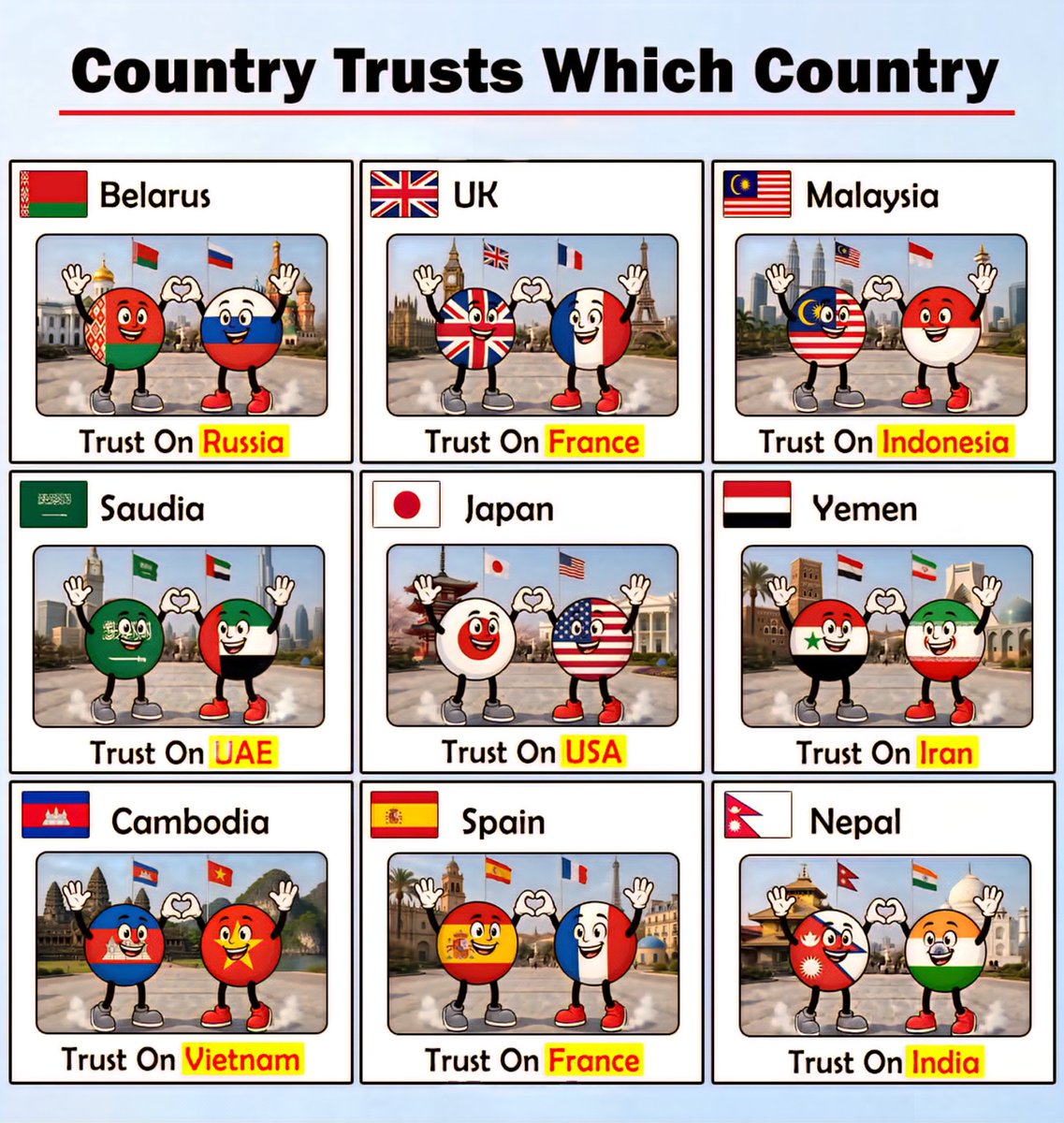
Belarus and Russia: A Historical Alliance Reinforced
Belarus and Russia continue to maintain a close trust relationship, rooted in decades of political, economic, and military cooperation. Despite widespread geopolitical tensions globally, the two nations remain aligned, sharing infrastructural projects and mutual security interests. This alliance is often seen as a cornerstone of regional stability for Eastern Europe and Eurasia. However, some international observers question the durability of this trust amid internal political shifts in Belarus and ongoing sanctions on Russia.
United Kingdom and France: Historic Neighbors with Strong Diplomatic Ties
The trust between the United Kingdom and France remains robust in 2025, characterized by collaborative efforts in trade, security, and climate initiatives. Both countries, members of the G7 and NATO, actively work on joint projects to combat global challenges like cybersecurity threats and environmental sustainability. While Brexit initially strained relations, recent years have seen the nations rebuild stronger diplomatic rapport, emphasizing shared values and mutual interests.
Malaysia and Indonesia: ASEAN Powerhouses Maintaining Regional Confidence
Malaysia and Indonesia continue to foster a high level of trust, driven by their significant roles in ASEAN and the broader Indo-Pacific region. Cooperative economic development, joint maritime security initiatives, and cultural exchanges bolster their relationship. Both nations are vocal advocates for regional stability, often leading joint efforts to address issues such as climate change impacts and cross-border terrorism.
Saudi Arabia and the United Arab Emirates: Gulf Cooperation and Economic Ties
The trust between Saudi Arabia and the UAE remains a critical pillar of Gulf Cooperation Council (GCC) solidarity. Their joint investment initiatives, shared interests in oil and renewable energy development, and coordinated regional policies underline their alliance. Both countries are also key players in efforts to stabilize regional conflicts, including their involvement in Yemen and diplomatic engagements with Iran.
Japan and the United States: A Century-Old Alliance Strengthened
The enduring alliance between Japan and the United States continues to exemplify global partnership, especially in technological innovation, defense, and economic cooperation. Despite recent discussions about recalibrating military commitments, both nations reaffirm their strategic partnership to address regional threats, including North Korea and China’s expanding influence. Their collaboration extends to joint research initiatives and extensive trade agreements, solidifying trust on both sides.
Yemen and Iran: A Complex Relationship Marked by Rivalry and Influence
Yemen and Iran’s relationship is complex and often viewed through the lens of regional rivalry. While Iran supports certain factions within Yemen, the level of trust remains tentative due to ongoing conflicts and international sanctions. The relationship is influenced by broader geopolitical tensions in the Middle East, with each side attempting to leverage influence while navigating international pressure.
Cambodia and Vietnam: Neighboring Nations with Diplomatic Foundations
Cambodia and Vietnam maintain a cooperative relationship built on shared borders, economic trade, and regional stability. Their joint efforts in addressing border disputes and enhancing trade routes underpin a mutual trust vital for maintaining peace in Southeast Asia. Additionally, cultural and historical ties help to reinforce their diplomatic rapport.
Spain and France: European Partners with Deep Links
Spain and France enjoy a strong relationship within the European Union framework, characterized by economic partnership, cultural exchanges, and coordinated policies on migration and security. Their cooperation significantly contributes to regional stability and prosperity. Challenges like migration management and economic reforms continue to shape their diplomatic trust, which remains resilient.
Nepal and India: Long-standing Regional Allies
Nepal and India have historically shared a trusting and friendly relationship, crucial for regional security and economic development. Despite occasional border disputes and political challenges, their cooperation in areas such as trade, tourism, and disaster relief remains strong. People-to-people ties and cultural commonalities further deepen their diplomatic trust.
Note: These trust levels are based on recent public opinion surveys, perception studies, and diplomatic analyses conducted throughout 2025. Given the dynamic nature of global politics, these relationships are subject to change depending on regional developments, leadership shifts, and international events.
This detailed overview reflects the current state of trust among select nations as of 2025, illustrating how historic alliances, regional interests, and geopolitical factors influence international relations today.
 ChatGPT
 Perplexity
 Gemini AI
 Grok AI