
Select Language:
The Surprising Economic Shifts: How African Countries Once Outpaced China in Per Capita Income
1. Africa’s Wealthier Past: Countries That Outperformed China in 1980
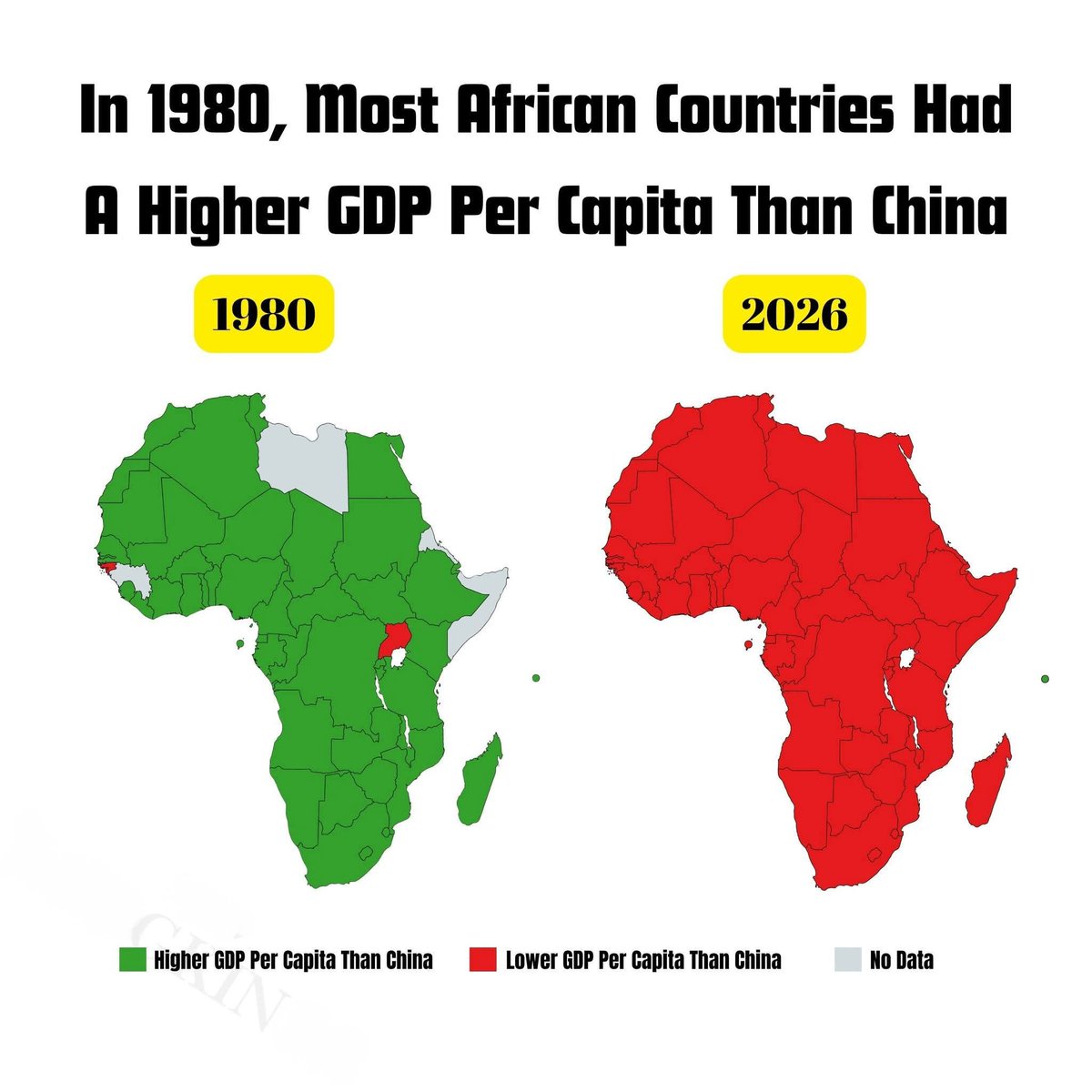
Back in the early 1980s, several African nations boasted higher Gross Domestic Product (GDP) per capita than China, defying current expectations of rapid growth on the Asian continent. Countries like Nigeria, Ghana, and South Africa recorded relatively high income levels per person, owing to their diverse resource bases and established industrial sectors. For instance, Nigeria’s oil reserves generated significant wealth, making it one of Africa’s richest countries per capita during that period.
However, these nations’ economies faced numerous hurdles, including political instability, corruption, and lack of technological advancement, which hindered sustained growth even as China’s economy was just beginning an accelerated development phase.
2. The Rise of China: When Did It Surpass African Economies?
By the late 1980s and into the 1990s, China’s economic reforms — spearheaded by Deng Xiaoping’s policies — began paying off. As China opened up to foreign investment and embraced market mechanisms, its GDP per capita started to grow exponentially. This period marked the beginning of China’s climb towards becoming an economic powerhouse.
By approximately the year 2000, China had surpassed most African nations in per capita income. The country’s focus on manufacturing, infrastructure, and export-led growth allowed it to close the gap quickly. Today, China is the world’s second-largest economy, with a much higher GDP per capita than most African countries.
3. How Africa’s Economies Have Changed Since 1980
While many African countries had higher GDP per capita than China in 1980, most have seen slow or stagnating growth over the past four decades. Political instability, repeated conflicts, and inadequate infrastructure investments contributed to persistent gaps. In some cases, economies that were once relatively well-off have experienced setbacks, struggling to keep pace with global economic shifts.
South Africa, for example, maintained a relatively high GDP per capita through the early 2000s but faced economic stagnation due to internal issues like inequality and governance challenges. Other countries, such as Nigeria and Ghana, have experienced periods of growth but remain behind China’s economic trajectory.
4. Which African Countries Have Caught Up or Overtaken?
In recent years, some African nations have shown promising signs of closing the economic gap. Countries like Ethiopia, Rwanda, and Kenya have achieved impressive GDP growth rates, driven by investments in technology, infrastructure, and entrepreneurship.
Despite these gains, most African nations still lag far behind China in terms of income per capita. The continent’s overall economic landscape remains uneven, with a few countries making strides while many others continue to face significant development hurdles.
5. Current Data: Who Leads in GDP Per Capita Today?
As of 2025, the landscape has shifted dramatically:
-
Several African countries, such as Seychelles, Botswana, and Gabon, now have higher GDP per capita than China, owing to resource exports and tourism.
-
China, meanwhile, enjoys the world’s second-largest economy but with a moderate GDP per capita compared to developed nations, reflecting its vast population.
-
Many nations, especially in West and Central Africa, still report lower GDP per capita than China, primarily due to ongoing economic reforms and infrastructural development needs.
6. The Future of African Economies and Global Competition
Looking ahead, Africa’s economic prospects hinge on sustained investments in education, infrastructure, and technology. The continent’s young population offers opportunities for a burgeoning workforce, but this must be complemented by effective governance and economic diversification.
China’s example underscores how strategic reforms and investments can propel a nation from developing to developed status. African countries that harness their unique resources and implement sound policies could potentially accelerate growth, potentially surpassing nations like China in several economic metrics within the next decade.
In conclusion, the economic history of Africa and China highlights how nations can experience dramatic shifts in wealth and development over generations. The early 1980s saw African nations outpacing China’s per capita income, but rapid Chinese growth rewrote that chapter by 2000. Today, the economic game continues, with African countries increasingly looking to catch-up and define their roles in the evolving global economy.
 ChatGPT
 Perplexity
 Gemini AI
 Grok AI