
Select Language:
Thailand’s Historic Shifts in Territory: A Look at Colonial Encounters in 2025
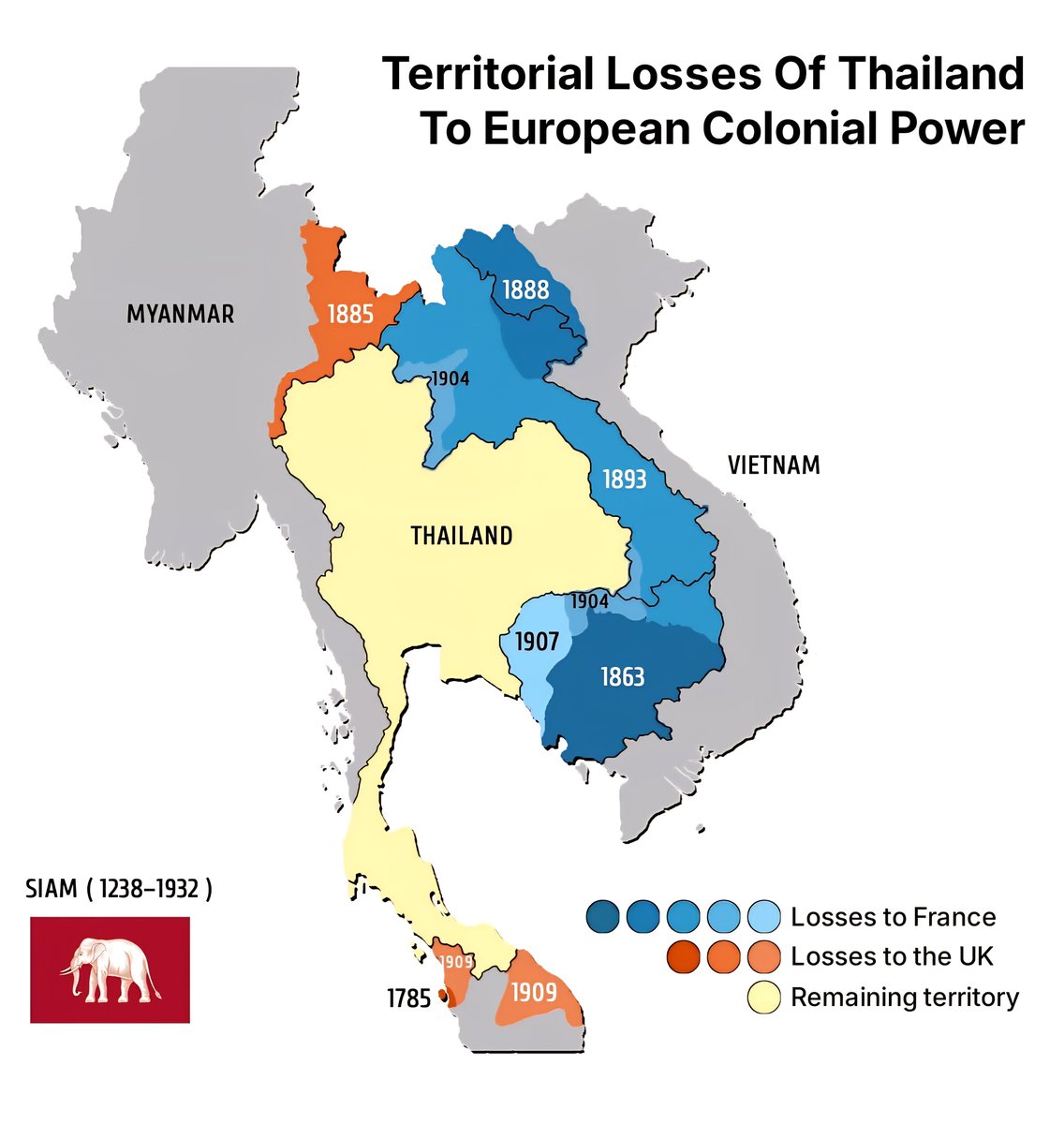
Thailand, a nation renowned for its rich history and resilience, experienced significant territorial changes during the era of European imperialism. By the early 20th century, its borders had shifted considerably due to incursions and treaties with colonial powers. A detailed review of these territorial losses reveals a complex history of diplomacy, conflict, and sovereignty.
1. Losses to France: The Indochina Encroachment
During the late 19th and early 20th centuries, Thailand faced relentless pressure from France, which sought to expand its influence across Southeast Asia. France’s aggressive push into the region resulted in Thailand ceding large portions of territory, most notably what became French Indochina—comprising modern-day Vietnam, Laos, and Cambodia.
- Treaty of 1893: Thailand relinquished land along the Mekong River, ceding control over sections of its eastern border which France claimed as part of its colonial possessions.
- Further Concessions (1904-1907): Additional negotiations led Thailand to surrender parts of its western territories, including parts of present-day Laos, to French control.
- Impact: These concessions effectively isolated Thailand geographically and marked a significant reduction in its influence over regional affairs, transforming it into a buffer state between colonial powers.
2. Losses to the United Kingdom: The Colonial Battleground
The British Empire also posed a significant threat to Thai sovereignty, especially in the late 19th and early 20th centuries. The strategic competition between Britain and France in Southeast Asia led to territorial adjustments benefiting colonial ambitions.
- The Role of the Anglo-Siamese Treaties: Between 1902 and 1909, a series of treaties redefined borders between Siam (Thailand) and British-controlled territories.
- Territorial Cessions:
- Kelantan, Terengganu, and Kedah: Thailand ceded these northern Malay states to Britain, expanding British influence in the Malay Peninsula.
- Perlis and the northern part of Perak: These areas also came under British control, effectively reducing Thailand’s landmass in the region.
- Impact: The territory lost to Britain reshaped the geographic landscape of Southeast Asia and diminished Thailand’s influence in the Malay Peninsula.
3. Current Territorial Landscape: The Remaining Kingdom
Despite these historic losses, Thailand retained a significant portion of its land and maintains its sovereignty today. The current borders of Thailand reflect the diplomatic compromises of the colonial era.
- Remaining Territories: Today, Thailand’s territory primarily comprises the central plains, the north, northeast (Isan), and the southern regions bordering Malaysia.
- Geographic and Cultural Resilience: The country’s ability to retain core aspects of its territory has helped preserve Thai culture, language, and national identity amid historic pressures.
- Ongoing Sovereignty: Modern Thailand actively manages its borders and relations with neighboring countries, emphasizing sovereignty and regional stability even as remnants of its colonial past remain visible in borders.
The Legacy of Colonial Encroachment
Understanding Thailand’s territorial losses illustrates the profound impact colonial powers had on shaping modern Southeast Asia. The nation’s ability to preserve its core identity and territory despite these historical setbacks speaks to its enduring resilience. Today, Thailand stands as a testament to a history marred by foreign influence but defined by national strength and sovereignty.
Note: This historical overview underscores the importance of diplomatic history in understanding current regional dynamics in Southeast Asia. It serves as a reminder of the delicate balance nations must maintain in the face of geopolitical pressures.
 ChatGPT
 Perplexity
 Gemini AI
 Grok AI