
Select Language:
The Surprising Population Balance Between Red and Blue Regions in 2025
A fascinating demographic shift has recently caught the attention of global analysts: the population in the so-called “Red Area” has now matched that of the “Blue Area.” This unexpected parity underscores significant developments in global population distribution and urbanization trends. Here’s a detailed look at what this means, broken down into key insights:
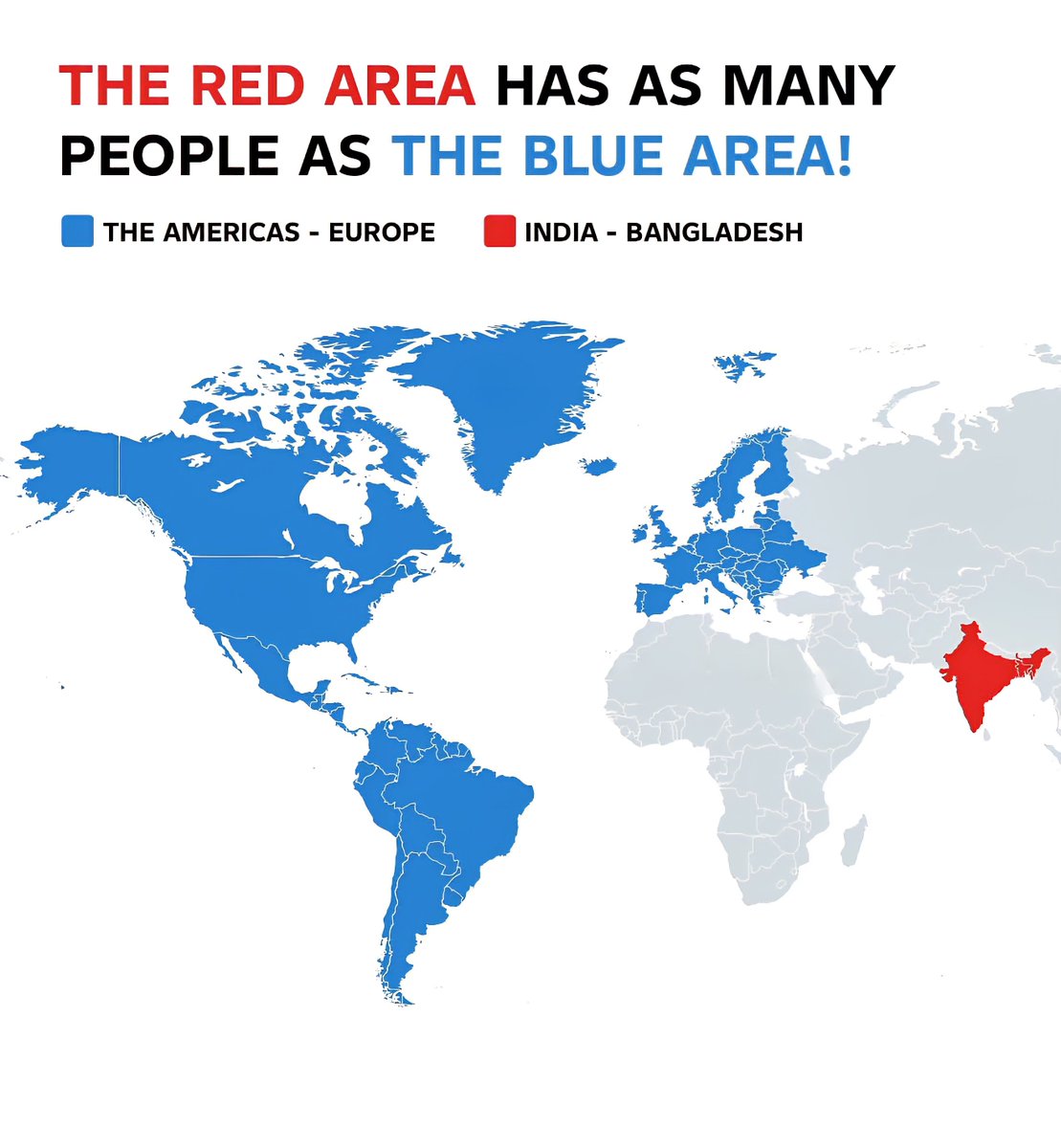
The Red Area Represents India and Bangladesh: A Region of Rapid Growth
India and Bangladesh, collectively known as the Red Area, continue to be among the world’s most densely populated regions. With a combined population now rivaling that of the Blue Area, these countries have experienced exponential growth driven by various factors:
- High Birth Rates: Despite recent declines, birth rates in India and Bangladesh remain high compared to global averages, fueling population growth.
- Urban Expansion: Major cities like Mumbai, Dhaka, and Kolkata have expanded rapidly, absorbing rural populations into urban ecosystems.
- Economic Development: Economic strides have improved healthcare access and living conditions, contributing to population stability and growth.
- Youthful Demographics: These nations boast young populations, which continue to contribute to population increases well into the next decade.
This demographic momentum poses challenges such as infrastructure strain, resource management, and environmental sustainability but also offers vast human capital potential.
The Blue Area Encompasses the Americas and Europe: A Region of Stabilization and Aging
Contrasting the Red Area, the Blue Area — representing the Americas and Europe — has seen its population plateau or decline slightly in recent years. Key characteristics include:
- Slowing Growth: Birth rates have dropped below replacement levels in many European countries and parts of North America.
- Aging Populations: A significant increase in elderly populations has shifted demographic trends, raising concerns over workforce sustainability and healthcare systems.
- Migration Patterns: Migration continues to influence population dynamics, with some regions experiencing influxes and others facing outmigration.
- Urbanization Trends: While urban centers remain populous, suburban and rural areas are experiencing depopulation in some regions.
Despite stable total populations, these regions are grappling with the societal implications of aging and the need for reform in healthcare, pension systems, and workforce policies.
Two Countries, Three Continents: The Expanding Complexity
The boundaries are often drawn simply—highlighting the diverse tapestry of human settlement. Specifically:
- The Americas and Europe: These are primarily Western Hemisphere and European regions with varied cultural and economic landscapes but shared demographic trends.
- India and Bangladesh: Situated largely within South Asia, these countries are experiencing some of the fastest demographic changes globally.
- Global Interconnectivity: The demographic shifts highlight how interconnected the world has become, with migration, trade, and technology influencing population flows across continents.
Implications for the Future: A Balancing Act
The equalization of populations between these regions signals a shift in global power and resource allocation. Key considerations include:
- Economic Opportunities: As India and Bangladesh grow, opportunities for markets, innovation, and development expand, potentially reshaping global economic alliances.
- Environmental Impact: Population growth in the Red Area exerts pressure on natural resources, demanding sustainable development strategies.
- Policy Challenges: Governments must adapt policies related to urban planning, healthcare, education, and social welfare to accommodate shifting demographics.
- Global Collaboration: International efforts will be crucial to address issues like climate change, migration, and equitable resource distribution.
This demographic milestone is not just a statistical curiosity but a clarion call for strategic planning and collaborative efforts across nations.
Future Projections and Preparation
Looking ahead, experts predict that the population in these regions will continue evolving at different paces. India and Bangladesh may see continued increases, particularly if fertility rates stabilize at higher levels, while Europe and North America will need to focus on aging populations and immigration policies.
These trends emphasize the importance of adaptable policies, technological innovation, and sustainable development to manage the demographic shifts effectively.
As demographic dynamics continue to shift, understanding and responding to these changes becomes paramount. The world stands at a crossroads where the choices made today will shape the global landscape of tomorrow.
 ChatGPT
 Perplexity
 Gemini AI
 Grok AI