
Select Language:
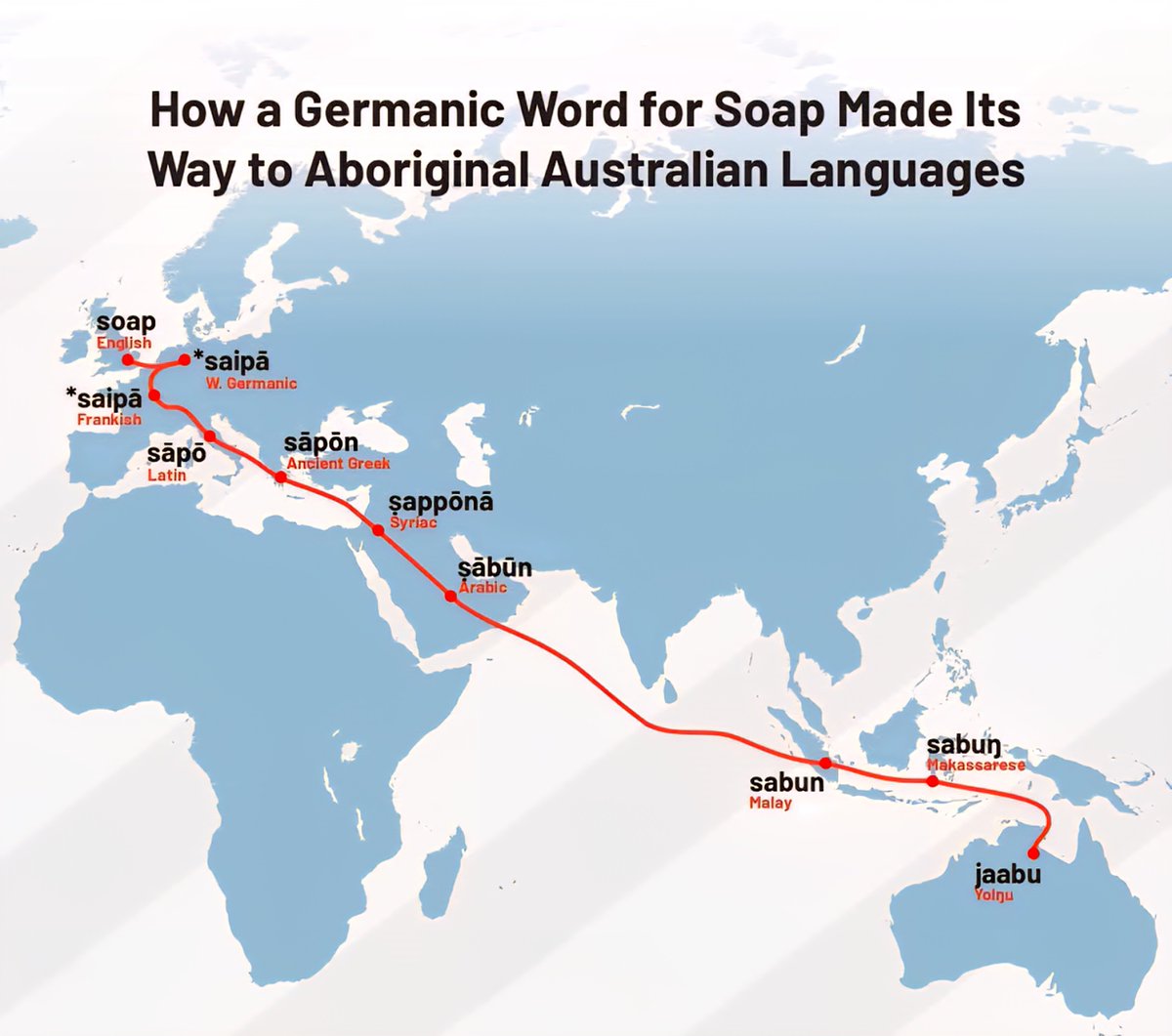
The Journey of a Germanic Word for Soap into Aboriginal Australian Languages
Unraveling the Origins of a Common Word
The curious case of how a word related to soap has traveled from European languages into Aboriginal Australian dialects offers fascinating insight into linguistic evolution and cultural exchange. Linguists have traced the roots of this word back to the Germanic language family, highlighting a surprising migration across continents and centuries. The story begins in Europe but doesn’t end there—its journey into remote Australia challenges assumptions about language barriers and illustrates the interconnectedness of human history.
The Germanic Roots of the Term
The word in question stems from the Old Germanic root saip or saipa, which originally referred to a cleansing substance or soap. Over time, this term was adopted into various Germanic languages, including German “Seife,” Dutch “zeep,” and English “soap.” These variations share common ancestry, showcasing a linguistic branch that evolved across borders while maintaining core phonetic similarities.
The Spread with Colonial Expansion
During European colonization, many words were introduced into native languages through trade, settlement, and cultural contact. In the case of Aboriginal Australian languages, the migration of the soap-related term is believed to be linked with early contact—possibly through traders or settlers—who brought familiar items and vocabulary with them. Interestingly, the term didn’t simply remain in coastal or trade-oriented communities but permeated various language groups across the continent.
How the Word Adapted to Aboriginal Languages
Linguists observe that when this European word was absorbed into Aboriginal languages, it underwent phonetic changes suited for local sound systems. In some regions, the term was shortened or adapted to fit the phonological constraints of the language. For example, in certain dialects, it became seepi or sapy, blending European origins with indigenous speech patterns. This process exemplifies how languages are remarkably flexible, borrowing terms but molding them to local linguistic landscapes.
Cultural Implications of the Loanword
The incorporation of a foreign term for soap signals more than just linguistic borrowing; it reflects cultural interactions and exchanges. Soap—and cleansing agents—were not indigenous to Australia, so the adoption of this word indicates a point at which contact resulted in tangible cultural influence. This borrowing underscores a history of interactions that brought new technologies, items, and vocabulary into Aboriginal communities, often as a result of trade, colonization, or cross-cultural encounters.
Significance in Modern Linguistics
Contemporary linguists study these instances to understand how words travel and transform across languages and cultures. The soap term’s journey shows that linguistic exchange isn’t confined to distant or well-documented histories but continues into modern times. It also highlights the importance of documenting such borrowings, which serve as linguistic artifacts of historical contact and change.
Visual Evidence of Cultural Exchange
The image captures the richness of Australian cultural history, illustrating a community engaged in a traditional activity. It signifies how modern influences—such as borrowed words for everyday items—harmonize with indigenous practices. This blend of tradition and external influence is a testament to the dynamic nature of language and culture.
Reflection on Language Evolution
The introduction and adaptation of this Germanic-origin word into Aboriginal Australian languages exemplify the unpredictable yet interconnected pathways of linguistic evolution. It highlights how even remote communities engage with global histories and technologies, integrating new words into their vocabularies while preserving their unique linguistic identities. Over time, these borrowed words become part of the cultural fabric, illustrating a shared human story of adaptation and communication.
In 2025, the journey of this simple word for soap reminds us that language is a living record of human history—continuous, interconnected, and ever-evolving.
 ChatGPT
 Perplexity
 Gemini AI
 Grok AI