

Select Language:
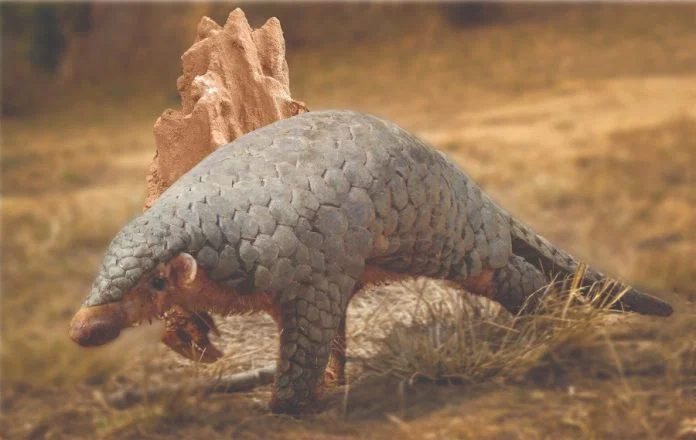
Scientists have confirmed that a little-known Himalayan pangolin is actually a distinct species, ending nearly 190 years of scientific uncertainty. This finding could be pivotal in protecting one of the world’s most heavily trafficked mammals from illegal poaching.
Published in Communications Biology, the study reveals that the Himalayan pangolin should be recognized scientifically as Manis aurita, rather than being grouped with the Chinese pangolin.
Pangolins are unique mammals native to Asia and Africa, characterized by their protective scales made of keratin, the same substance in human fingernails. These scales serve as armor against predators but have also turned pangolins into prime targets for illegal wildlife trafficking. Despite their protected status, pangolins are considered the most trafficked mammals worldwide, primarily because their scales are highly prized in traditional medicine—despite no scientific evidence supporting health benefits.
For decades, scientists believed pangolins in China and those in the Himalayan region belonged to the same species. However, subtle differences in appearance and DNA hinted they might actually be separate species. To clarify this, researchers compared modern DNA samples with genetic material from a museum specimen collected in Nepal back in 1836. This nearly 190-year-old sample is housed at the Natural History Museum, and scientists successfully extracted and analyzed its DNA despite its age.
The genetic analysis was definitive. The ancient specimen matched the modern Himalayan pangolins, confirming that the proper scientific name for this species is Manis aurita, a designation first assigned in 1836. Because scientific naming conventions prioritize the earliest valid name, a newer name proposed in 2025 is no longer recognized.
Though visually similar to the Chinese pangolin, the Himalayan pangolin differs in several ways. It tends to be larger, has a longer tail, and features smaller ears—hence the species name “aurita,” meaning “ear-marked.” Additionally, their habitats are separate: the Himalayan pangolin resides in regions of Nepal, northern India, Bhutan, and Myanmar, while the Chinese pangolin is mostly found in China. Accurate knowledge of their distribution is essential for targeted conservation efforts, ensuring the right animals are protected in the right areas.
This discovery also enhances efforts to combat wildlife trafficking. During illegal seizures, authorities typically find only pangolin scales rather than entire animals. With the new DNA data, scientists can determine which species the scales originate from and trace poaching hotspots. Such information helps wildlife officials focus their anti-poaching initiatives where they are needed most, safeguarding endangered species.
The research further supports conservation by preventing the accidental release of the wrong pangolin species into the wild. In the past, there was a risk of Chinese pangolins being introduced into habitats that should only contain Himalayan pangolins.
Researchers highlight the importance of museum collections, demonstrating that specimens collected over a century ago can still provide vital scientific insights today. Combining traditional specimen collections with modern DNA analysis allows scientists to gain new understanding and develop more effective strategies for wildlife protection, increasing the chances of survival for species like the Himalayan pangolin.
 ChatGPT
 Perplexity
 Gemini AI
 Grok AI