

Select Language:
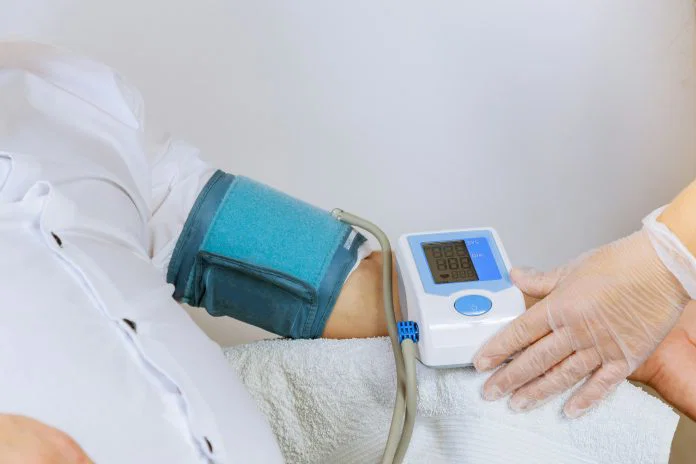
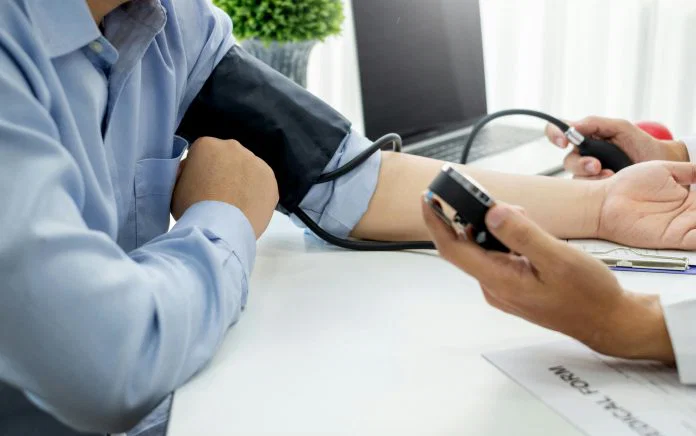
Blood pressure measurement has traditionally involved wrapping a cuff around the upper arm, inflating it until it compresses the artery, then gradually releasing it while readings are taken. Although this method is widely accepted and generally accurate, it has a significant limitation: it only provides a single snapshot at one moment in time.
New research suggests this approach might overlook much of the critical information doctors need. A team from the University of Utah and the University of Illinois Chicago has developed a wearable device capable of continuously tracking blood pressure without the need for an inflatable cuff. Their findings, published in Nature Communications, could mark a major breakthrough in cardiovascular health monitoring.
Blood pressure is often called a silent threat because individuals can have dangerously high readings without experiencing noticeable symptoms. Over time, unmanaged high blood pressure can damage blood vessels and increase the risk of heart disease, strokes, aneurysms, and kidney problems. Since blood pressure fluctuates throughout the day, medical professionals often recommend multiple measurements rather than relying on just one.
However, current monitoring devices tend to be bulky, uncomfortable, or inconvenient, making continuous outside-of-hospital monitoring challenging. Researchers aimed to create a simpler, wearable solution similar to an ordinary smartwatch.
Unlike some consumer devices that estimate blood pressure using light sensors—methods whose scientific accuracy is still debated—the new device employs a different strategy. It transmits a tiny electrical current through the wrist and measures changes in bioimpedance, which indicates how easily electric current passes through blood and body tissues.
As blood flows through arteries with each heartbeat, these electrical properties shift slightly. The device captures these subtle changes and uses them to estimate blood pressure. What sets this technology apart is its blend of artificial intelligence and fundamental physical science. Instead of letting AI generate predictions unrestricted, the researchers embedded mathematical models of blood flow and electrical behavior directly into the system. This ensures the AI adheres to established physical laws when calculating blood pressure.
According to the researchers, this approach enhances the realism and reliability of the predictions. By integrating principles from fluid dynamics and electromagnetism, the system avoids generating physically impossible results, making the estimates more trustworthy.
The device was tested on 150 individuals, including ICU patients and outpatients, providing a broad range of data from healthy individuals and those with medical conditions. One of its most promising features is the ability to continuously record blood pressure waveforms. Traditional measurements yield only two numbers: systolic and diastolic pressures. These are important but represent just a small slice of the full picture.
This new technology captures a continuous flow of blood pressure data over time. Think of it as watching a movie instead of a single photograph. Such detailed monitoring can detect patterns and changes associated with exercise, stress, sleep, medication, or daily activities—information that static measurements might miss.
The potential benefits are significant for patients and healthcare providers alike. Continuous blood pressure data could improve early detection of cardiovascular issues and enable more personalized treatments. Moreover, it offers a way for individuals to monitor their health more comfortably at home rather than relying solely on periodic clinic visits.
Despite the promising results, the technology is still in its early stages. Further studies, regulatory approval, large-scale testing, and real-world validation are necessary before this smartwatch can become commercially available.
Nonetheless, this research underscores how innovations in engineering, mathematics, and artificial intelligence are reshaping healthcare. Its strength lies in applying scientific principles to guide AI predictions, making the results easier to interpret and Trust.
With continued development, cuff-free blood pressure monitoring could become a practical, everyday tool that offers a richer understanding of cardiovascular health than current methods provide.
For those concerned about high blood pressure, recent studies suggest early time-restricted eating may help, and natural options like coconut sugar could potentially reduce blood pressure and improve arterial flexibility. Additional research highlights the impact of added sugar on blood pressure and suggests vitamin D might benefit individuals with diabetes by lowering their blood pressure.
Source: University of Utah.
 ChatGPT
 Perplexity
 Gemini AI
 Grok AI